Last updated November 22, 2026
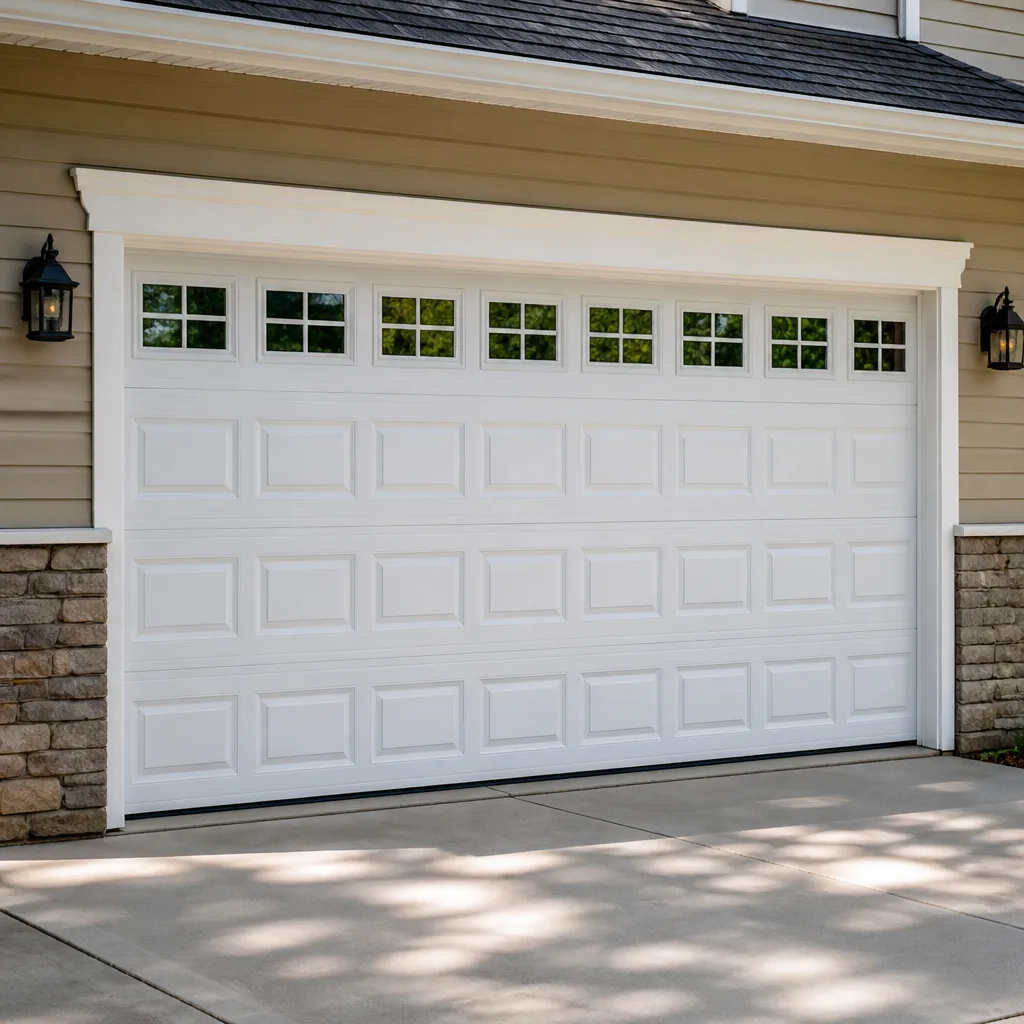 Raised-panel steel
 Carriage house
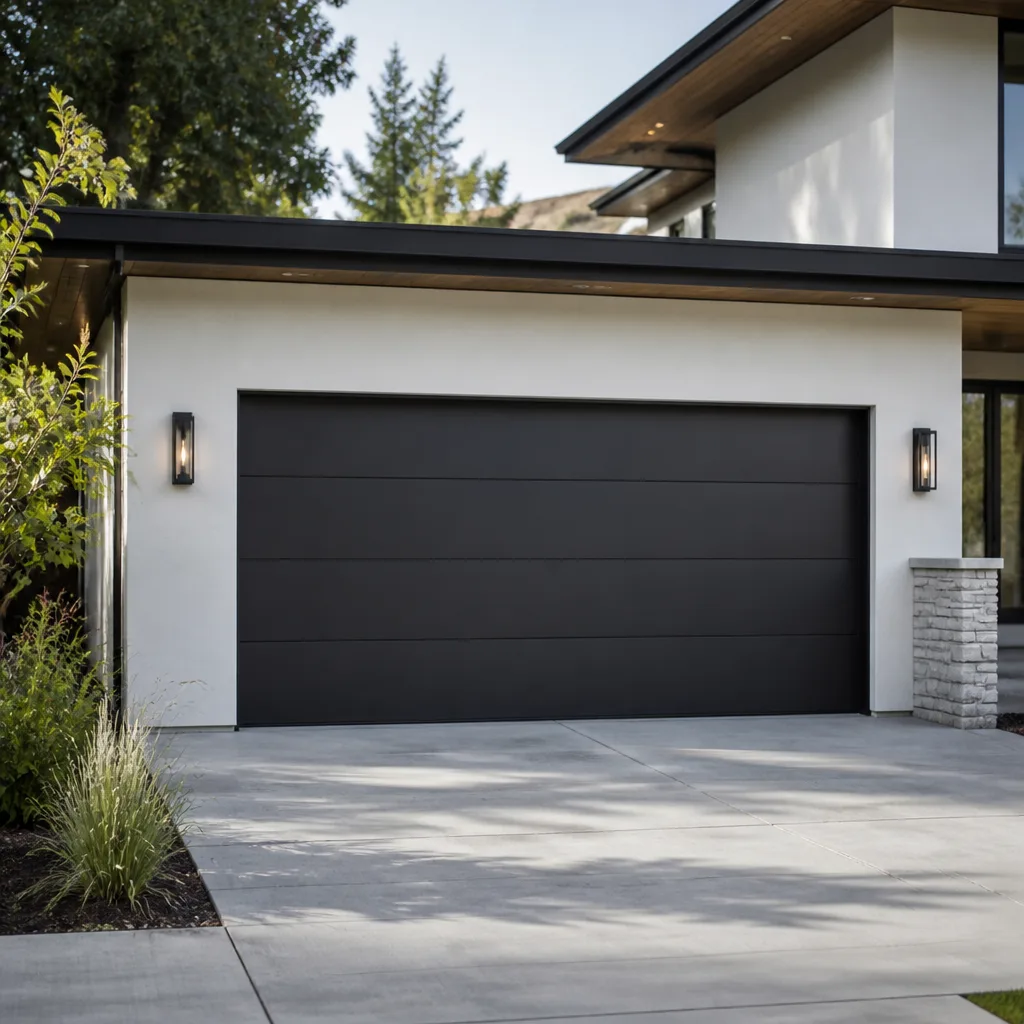 Modern flush
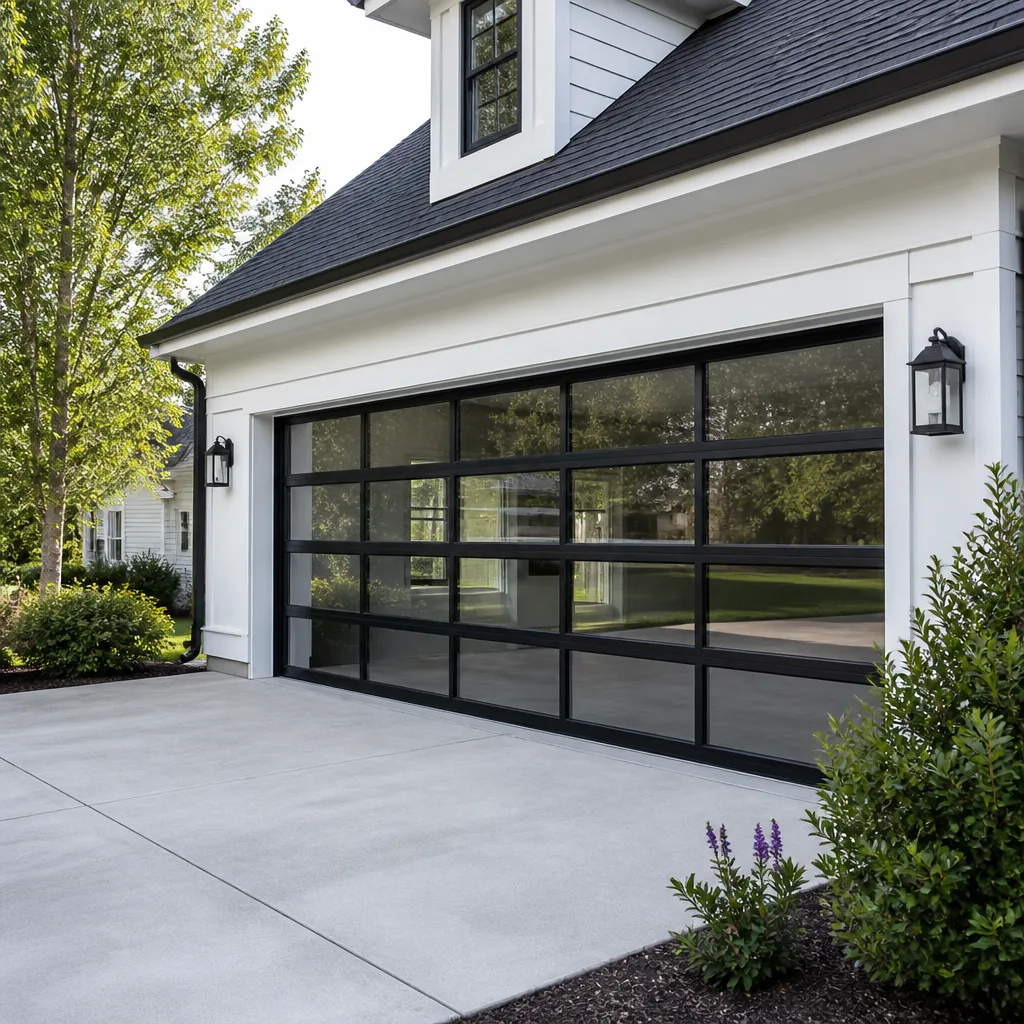 Full-view glass
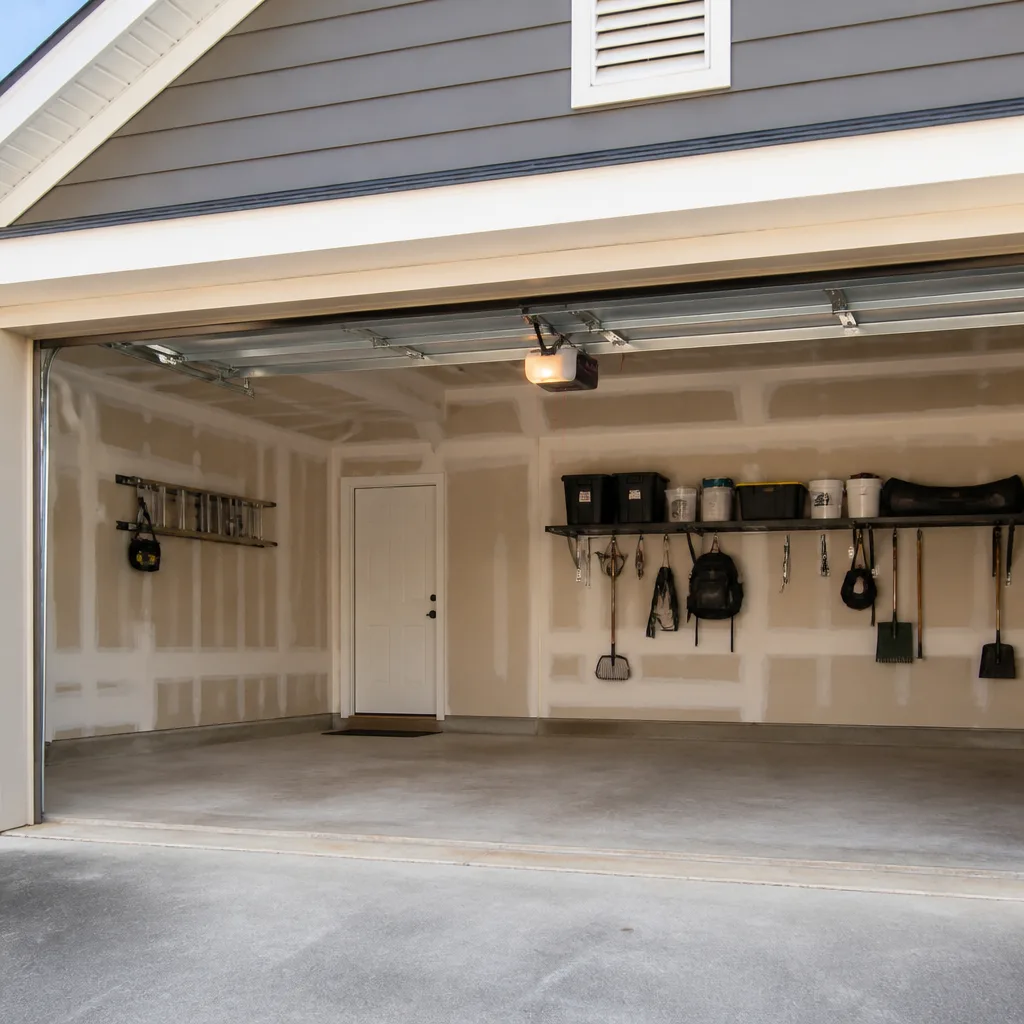 LiftMaster openers
 Chamberlain openers
Full 25-point door and opener safety check with every visit - springs, cables, rollers, tracks, and your LiftMaster or Chamberlain opener included
You get a price before we start. It does not change when the pro arrives.
Get your free estimateGarage Door Repair Maintenance Schedule: What to Do and When
Most homeowners think about their garage door in one of two states: working, or broken. That gap in between is where expensive repairs are born. A torsion spring is rated for roughly 10,000 cycles – if your household opens and closes the door four times a day, that’s less than seven years of life before the spring is spent. Skip a single lubrication cycle a year and you speed that wear along. The number on the spring doesn’t care about the calendar; it cares about use. That’s the key most maintenance advice misses, and it’s why a Centennial household with two drivers and a busy routine needs a different rhythm than a retired couple who open the door twice daily. This guide gives you an actual schedule to follow: what to check monthly, twice a year, and annually, which products belong in your garage, and the warning signs that mean you’ve moved past maintenance into repair territory.
Quick Answer
Lubricate springs, hinges, and rollers monthly; check cables, bottom seal, and balance twice a year; book a professional tune-up annually or every 2,500 door cycles, whichever comes first. In Centennial, add a weatherstripping inspection in late fall before the first hard freeze and a balance test once spring temperatures settle. High-use households should shift to cycle-based thinking, not calendar-based thinking.
Styles & brands we work with
- Raised-panel steel
- Carriage house
- Modern flush
- Full-view glass
- LiftMaster openers
- Chamberlain openers
Table of Contents
- Cycle-Based vs. Calendar-Based Thinking: Why Time Alone Misleads
- The Monthly Checklist: What to Do Every Four Weeks
- The Biannual Check: Cables, Seals, and Balance
- The Annual Tune-Up: What a Professional Should Cover
- Centennial Seasonal Notes: Cold, Dry Air, and Hail Season
- The Right Lubricant (and Where Not to Put It)
- Red-Flag Symptoms That Mean Call a Technician
- Frequently Asked Questions
Cycle-Based vs. Calendar-Based Thinking: Why Time Alone Misleads
A cycle is one complete open and one complete close. Manufacturers rate springs by cycles because that’s the actual mechanical load the steel endures. Every turn of the drum bends the spring a fraction further toward fatigue. Time sitting still doesn’t wear a spring; motion does. A door that opens four times daily racks up around 1,460 cycles a year. A door that opens twice daily logs about 730. Same calendar year, half the wear. Treating both households with the same “once a year” advice is how one of them ends up with a snapped spring out of nowhere.
Here’s how to translate cycles into a schedule without counting every push of the button:
- Estimate your daily cycles. Count each time the door goes up and down. A family with two working drivers often hits four to six. A single driver typically runs two to three.
- Multiply by 365. That’s your annual cycle load.
- Compare against the tune-up interval. If your annual load exceeds 2,500 cycles, shorten your professional service interval to about every 10 to 12 months, or book service halfway to the manufacturer’s cycle rating.
- Use the feel test. At the halfway point of your spring’s rated cycles, have a technician check spring tension and opener limits. That midpoint is when wear starts compounding.
Calendar-based thinking isn’t wrong – it’s just incomplete. For low-use households, an annual visit is usually enough. For high-use ones, the calendar lulls you into skipping the year that mattered. Combine both: use the calendar as a reminder, use cycles to decide if that reminder should trigger action now or later.
Why this matters differently in Centennial
Centennial sits at higher elevation with a dry climate and wide temperature swings between seasons. Metal expands and contracts with those shifts, and lubricant thins out in summer heat, then stiffens in winter cold. A door that runs smoothly in July can grind and groan in January with the same number of cycles on the spring. That physical reality is a reason to test balance in spring and fall, not just once a year. Households in neighborhoods like Orchard Valley or Foxridge, where driveways face west and take full afternoon sun, tend to see faster lubricant breakdown on the sun-facing hardware. It’s not a code issue; it’s just physics working on your door.
The Monthly Checklist: What to Do Every Four Weeks
Monthly tasks take under fifteen minutes and cover the parts that move constantly. This is where you catch wear before it cascades. Lubrication is the single highest-value habit on this list – skipping one cycle a year measurably accelerates wear on hinges and rollers, which then put more strain on springs and the opener motor. Walking the door once a month with your eyes and ears is how you learn what normal sounds like, so you notice when something’s off.
- Lubricate springs. Spray a small amount of white lithium grease or a silicone-based garage door lubricant along the coil of each torsion spring (or the length of each extension spring). Wipe excess with a rag.
- Lubricate hinges. A drop on each hinge pivot point. Don’t soak them; you’re targeting the moving pin, not the plate.
- Lubricate rollers. A small amount on the bearing of each roller, not the roller surface itself. Nylon rollers usually need less; steel rollers need a regular touch.
- Inspect the door visually. Run your hand along the bottom edge (door fully closed) to feel for dents or damage. Look at panel seams for separation.
- Listen. Open and close the door once and pay attention. A healthy door is quiet and steady. Grinding, scraping, or a sudden pop tells you something’s changing.
- Check the safety reverse. Place a small object (a roll of paper towels works) in the door’s path and confirm the door reverses on contact when closing.
That last task is the one people forget. The safety reverse on your Genie or LiftMaster opener is a photoelectric eye or a pressure sensor, depending on the model. If it stops working, the door will close on whatever’s in the way. Testing it monthly costs nothing and is worth more than any other habit on this list. While you’re at it, wipe the photoelectric eye lenses with a soft cloth. Dust and spiderwebs are the most common cause of a door that won’t close all the way.
Monthly task summary
- Lubricate torsion or extension springs
- Lubricate hinge pivots
- Lubricate roller bearings
- Visual inspection of panels and edges
- Listen for new sounds during operation
- Test the safety reverse
- Clean the safety eye lenses
The Biannual Check: Cables, Seals, and Balance
Twice a year – once before winter, once after – you should look at the parts that don’t need lubrication but do need eyes. Cables, bottom seals, weatherstripping, and the balance of the door itself. Cables are safety-critical: they’re under tension, they can fray, and a failing cable can be dangerous. Don’t try to adjust, remove, or re-route a cable yourself. Inspect from a safe distance and note anything you see.
- Inspect cables. Look for fraying, kinks, or rust along the length of each cable. Note any visible wear. A cable that’s beginning to fray strands is a red flag for a repair call, not a DIY fix.
- Check the bottom seal. The rubber seal along the bottom of the door should sit flush against the floor with no gaps, tears, or crumbling. A worn seal lets in cold air, insects, and water.
- Inspect weatherstripping. Look at the strips around the door frame (the stop molding) and along the sides. Cracks, brittleness, or sections pulling away are common after a season of temperature shifts.
- Balance test. With the door closed and the opener disconnected (pull the manual release), lift the door to about waist height and let go. A balanced door holds its position or drifts slightly. A door that slams down or shoots up needs spring tension adjustment, which is a technician job.
- Check the opener limit settings. If the door doesn’t fully close or slams at the bottom, the opener’s limit setting may need adjustment. Most modern openers (LiftMaster, Chamberlain, Genie) allow small travel-limit tweaks per the manual.
- Inspect the track. Look for bends, dents, or debris in the vertical and horizontal track sections. Don’t try to bend track back into shape yourself – misaligned track is worse than a slight bend.
Balance test in plain terms
The balance test is the closest thing to a diagnostic you can do without tools. A door that’s properly balanced feels light at every point of travel. A door that’s out of balance is telling you the springs are weakening or one spring has already started to fail. In our experience, a door that used to feel light and now feels heavy at halfway up is almost always a spring on its way out – it’s not the rollers or the opener.
The Annual Tune-Up: What a Professional Should Cover
An annual professional tune-up is the one maintenance item worth paying for. It’s not because you can’t do the monthly and biannual checks yourself – it’s because a technician can see the wear you can’t: spring fatigue at the coil level, cable wear near the drum, bearing play in rollers, and opener gear condition. A proper tune-up on a Genie or LiftMaster system takes about an hour and should cover a checklist, not a quick spray-and-go.
Here’s what an annual service should include:
- Full hardware inspection. Springs, cables, rollers, hinges, track, and end bearing plates.
- Spring tension check. Torsion springs measured against the door’s rated cycle load; extension springs checked for stretch and stretch-stop condition.
- Lubrication. All moving points re-lubricated with the correct product, including hinges, rollers, springs, and opener chain or belt.
- Balance and alignment test. Full open-close cycle with manual release to confirm the door is balanced.
- Opener check. Travel limits, force settings, safety reverse test, and a look at the drive gear if the model has one exposed.
- Weatherstripping and bottom seal inspection. Replace if worn.
- Written summary. A good technician tells you what they saw, what they didn’t touch, and what’s worth watching.
In Centennial, the best time to book the annual visit is early October – before the first hard freeze. That gives you time to repair weatherstripping or seals before cold air is pushing against them, and it means you’re not scrambling when the door fails the first cold morning. If a professional finds a failing spring during a tune-up, you’re not in emergency-service mode; you’re planning a spring repair on your schedule. That difference matters for what happens after the call.
When to shift the annual visit to twice a year
High-use households – two cars leaving every morning, a door that’s opened and closed through the evening – should book a service visit about every six to nine months. Doors past eight or nine years old should be checked at the same frequency regardless of use. Springs rated for 10,000 cycles are on their last legs by year eight in a high-use household, and a technician who checks them annually can catch early fatigue before it becomes an emergency.
Centennial Seasonal Notes: Cold, Dry Air, and Hail Season
Centennial’s weather does a specific kind of work on garage door hardware. Dry air means lubricants don’t get washed away but do dry out and gum up. Wide temperature swings fatigue seals and weatherstripping. Hailstorms, which are a real spring and summer feature in this part of Colorado, put a different kind of stress on the door: dents, panel damage, and sometimes track damage from a particularly energetic impact. None of that is unique to Centennial, but a schedule that’s written for a coastal climate doesn’t match what happens here.
Late fall: before the first hard freeze
- Inspect and replace any weatherstripping that’s cracked or pulling away.
- Check the bottom seal for gaps – cold air under the door is the most common winter complaint.
- Lubricate all moving points with a cold-stable product. Some greases stiffen significantly at low temperatures.
- Test door balance one more time. A spring that’s already weakening will behave worse in the cold.
The late-fall weatherstripping check is the one homeowners skip, and it’s the one that costs the most over a winter. A cracked seal at the door frame lets in a steady trickle of cold air that compounds into higher heating bills and a drafty garage.
Spring: after temperatures stabilize
- Balance-test the door. Cold-season metal expansion may have changed the door’s balance.
- Inspect for hail or impact damage from the winter and early-spring storms.
- Re-lubricate all hardware – the cold months tend to leave lubricants dry.
- Check the opener limits; a door that got slightly out of alignment over the winter often shows up here.
Summer: dust and heat
Dust accumulates in track and around the rollers, and hot afternoons thin out lubricant faster than you’d expect. Wipe down the track occasionally, keep the safety eye lenses clean, and pay attention to heat-related stiffness. Doors with steel rollers may need an extra lubrication touch in the peak months. If your door is a Clopay or Amarr model with a steel backer, check the panel fasteners for any loosening; expansion and contraction can work them loose over a summer.
The Right Lubricant (and Where Not to Put It)
The most common garage door maintenance mistake we see is reaching for WD-40 as a lubricant. WD-40 is a great product but it’s a solvent, not a lubricant. It’ll quiet a squeak for a week and then leave the hinge dry again. Worse, sprayed on springs it can attract dust and gum up. The right product is a garage-door-specific lubricant, white lithium grease in a spray can, or a silicone-based lubricant – all of which cling to metal without drying to a gummy film.
What belongs on your shelf for a Centennial garage door:
- White lithium grease spray. Good general-purpose choice for hinges, springs, and roller bearings. Works well in a wide temperature range.
- Silicone-based spray lubricant. Good for tracks and areas where you want a lighter film without grease. Doesn’t attract dust as readily.
- Nylon-brush or soft rag. Small brush for cleaning track and hinge pins before lubricating.
- Flashlight or headlamp. For inspecting the underside of the door and the opener rail.
- Owner’s manual. Yours, for the specific model. Clopay and Wayne Dalton doors and LiftMaster, Chamberlain, Genie, and Craftsman openers all have model-specific adjustment instructions.
Where not to apply lubricant
- The track. Most track needs no lubrication – the rollers should roll, not slide. Greasing track attracts dust and grit, then the door runs worse than it did before.
- The opener rail’s belt or chain. Manufacturer instructions vary. Some belts are factory-lubricated and shouldn’t be touched; some chains want a light grease. Check the manual before doing anything.
- The safety eye lenses. Never apply anything here. Clean them with a dry or slightly damp cloth only.
- Nylon rollers in most cases. Nylon rollers usually need no lubrication; check the manufacturer’s instructions. Lubricating them can do more harm than good.
One more note: don’t use anything that stays wet or sticky on the springs. Torsion and extension springs attract dust and grit, and a sticky spring becomes an abrasive one. A light film of dry-cling lubricant is all you want.
Red-Flag Symptoms That Mean Call a Technician
The whole point of a maintenance schedule is that you catch wear in the early, cheap stage rather than the late, emergency stage. These are the symptoms that mean the schedule has done its job and it’s time to stop scheduling and start calling. If you find any of the following during your monthly or biannual checks, don’t wait for the next interval.
- Snapped spring. If the door won’t open or is dead-heavy, or you see a gap or broken coil in one of the torsion springs, the spring has failed. Call for spring repair immediately. Springs are under extreme tension – this is not a DIY repair.
- Fraying cables. Strands separating from the core of the cable you can see at either end are a safety hazard. Call before the cable snaps.
- Door off-balance. A door that won’t hold at the halfway balance point, or slams down, is not just annoying; it’s dangerous. Springs or cables need professional attention.
- Grinding or popping from the opener. Often a sign of stripped gear or a failing bearing, both common on older Chamberlain or Craftsman units.
- Door reverses immediately after starting to close. Usually a safety eye or limit issue. If it happens repeatedly after cleaning the eyes, it’s time to call.
- Bent track. A door that wobbles, catches, or rubs against the frame is running on bent track, and running on bent track makes everything else wear faster.
- Visible panel damage from hail or impact. A dented panel can be cosmetic, but a dented panel with a bent section behind it is structural and needs a look.
Anything on that list tells you the door is past maintenance and into repair. The other category of red flag is subtler: a door that feels different in a way you can’t quite name. A little heavier, a little slower, a slightly different sound. Those impressions are usually right, and the earlier you call on them, the less you pay.
Spring repair is the one call not to delay
Torsion springs store an enormous amount of energy. An extension spring failure can send the spring flying. A torsion spring failure can send the door crashing down. Neither failure is something to work around “for now” while you get to it. If your Centennial door shows any sign of spring failure, call us at (844) 575-1130. Spring repair is a core part of what we do, and it’s the reason our technicians train specifically on it.
Common Mistakes to Avoid
- Using WD-40 as a garage door lubricant. WD-40 is a solvent, not a lubricant, and it’ll quiet a squeak for a week then leave the part drier than before. Use white lithium grease or a silicone lubricant instead.
- Greasing the track. A common mistake because the track looks like the part that needs lubricant. It’s not. The rollers should roll, not slide, and adding grease just collects dust into a grinding paste. A Centennial door that picks up grit from a dusty summer is especially prone to this.
- Skipping the pre-winter weatherstripping check. A cracked seal at the door frame lets in cold air all winter. October is the right time to check; not January.
- Assuming the annual visit covers everything. The professional tune-up handles the hardware you can’t safely touch, but monthly lubrication and safety-reverse tests are still yours. They’re not redundant; they’re the layer that catches problems between visits.
- Forcing a door that’s stuck. If the door won’t open, or opens unevenly, don’t pull the manual release and force it. A door with a broken spring or off-track roller can fall or drop on someone in the process.
- Ignoring subtle changes. A door that feels heavier than it used to, or sounds different, is telling you something. In our experience, homeowners who call when they first notice the change spend less on the repair than those who call when the spring has already snapped.
- Trying to adjust the springs. If the balance test fails, don’t touch the springs. That’s the one job on this list that requires a trained technician and the right tools. The springs on a Wayne Dalton or Amarr door look simple and aren’t.
See the difference
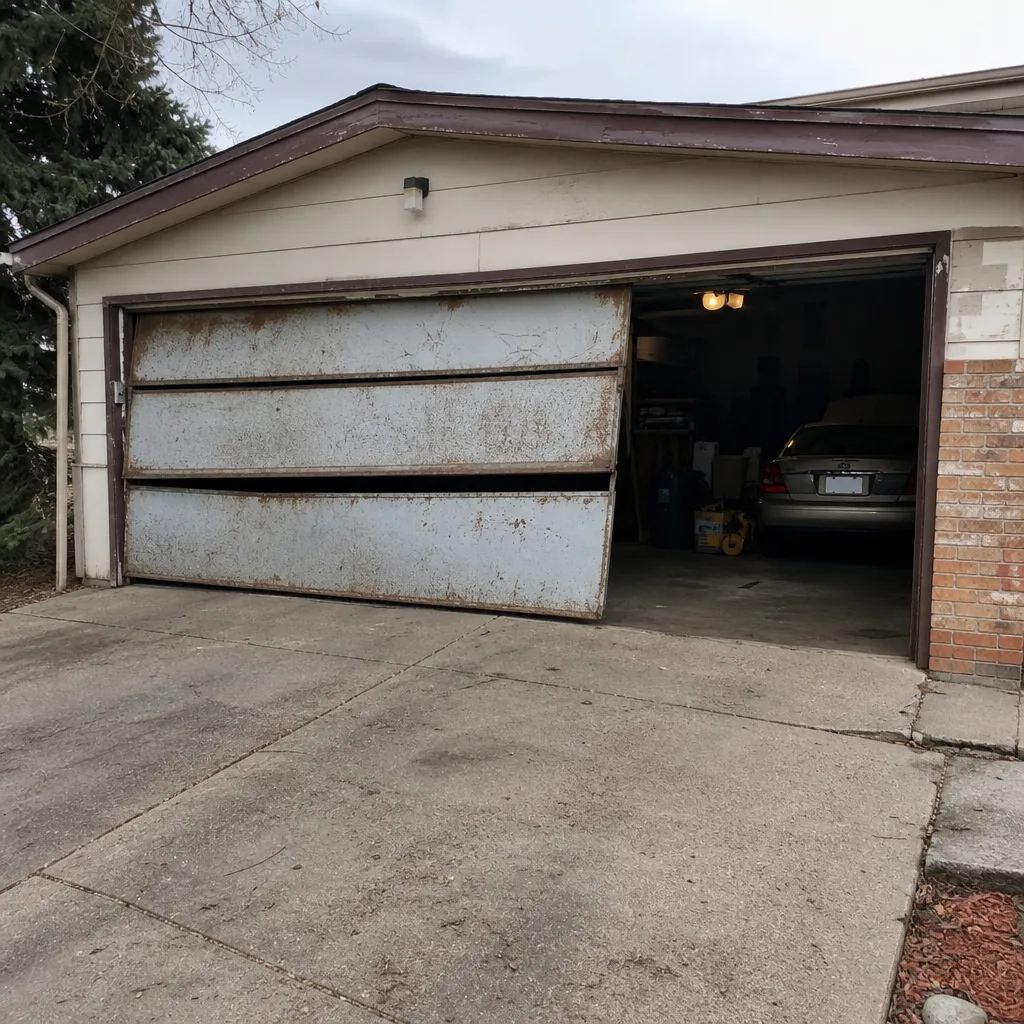 Before
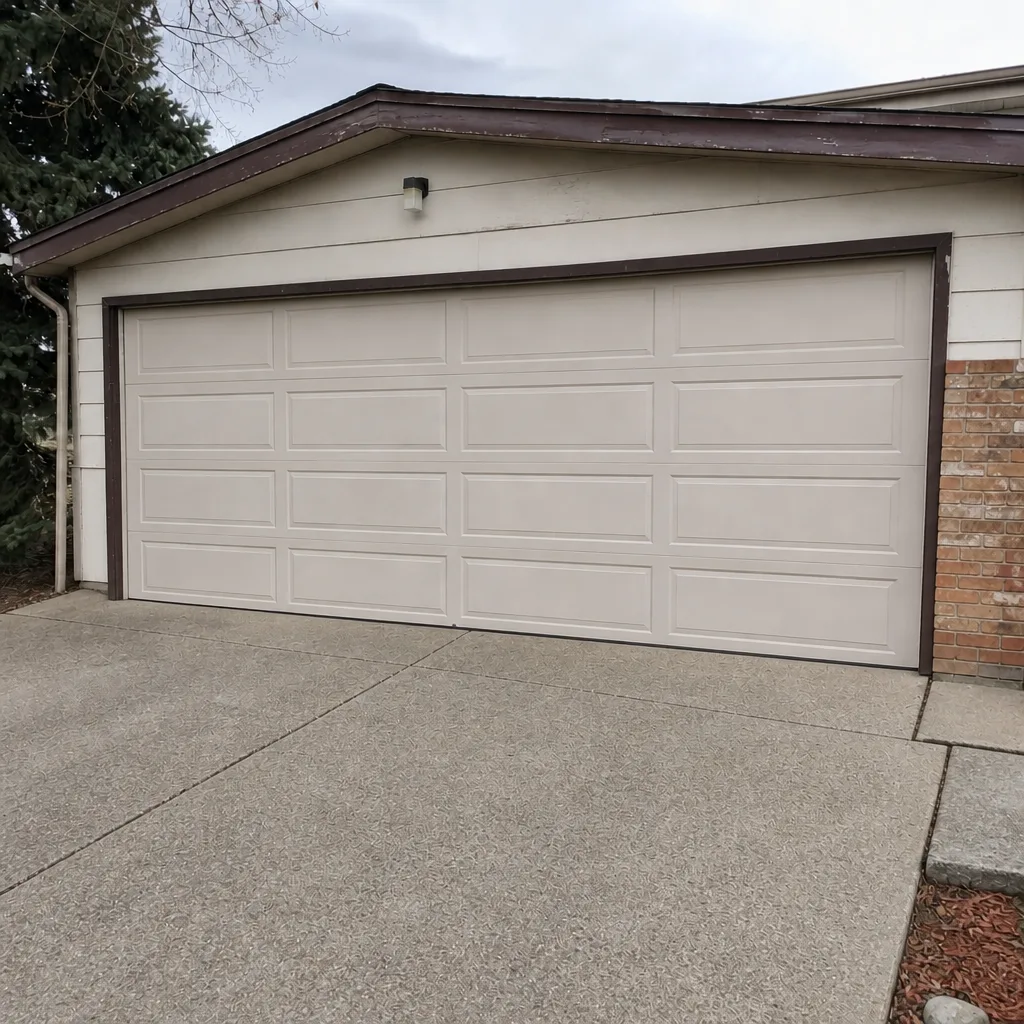 After
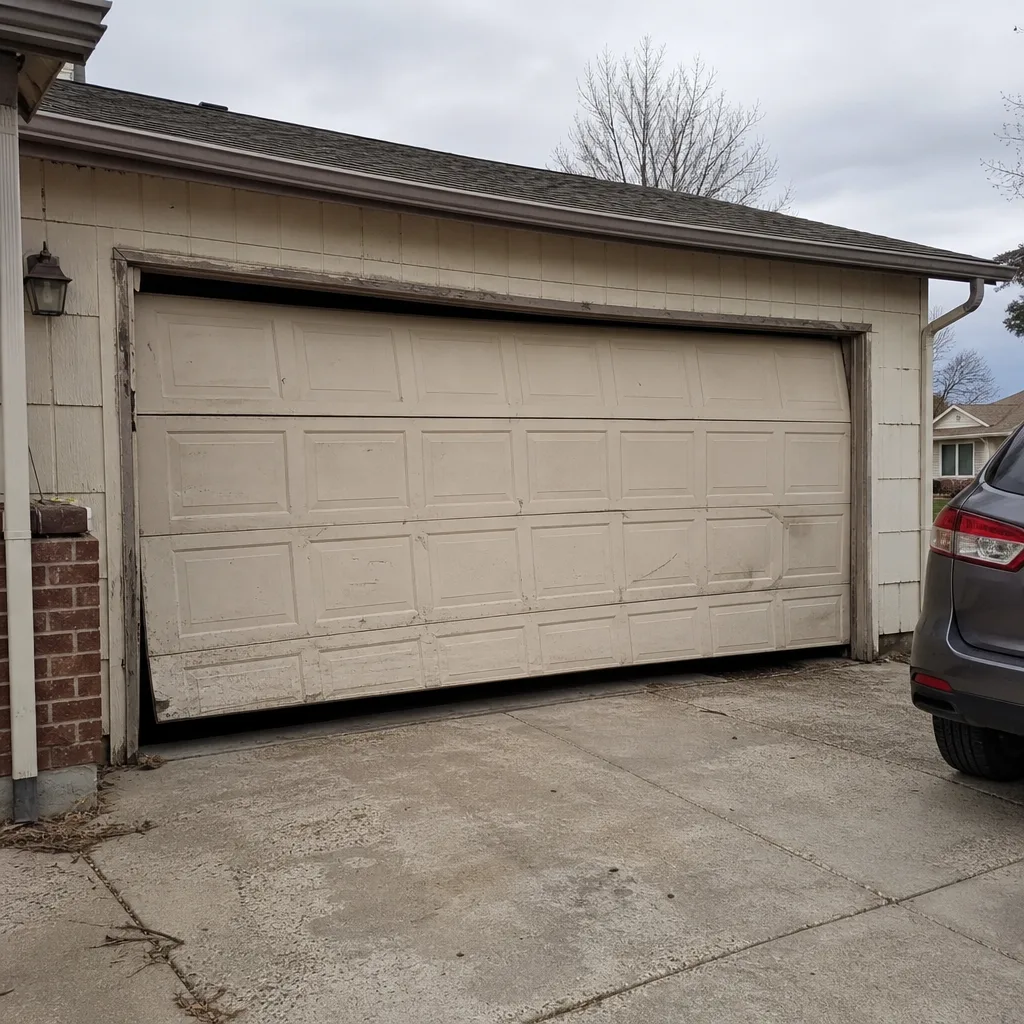 Before
 After
 Before
 After
When to Call a Professional
Call a professional anytime you find any of the red-flag symptoms above, anytime the balance test fails, anytime you see a broken or frayed component, and anytime the door simply doesn’t behave the way it used to. Also call when the annual tune-up is due; a scheduled service visit is the cheapest way to keep a door healthy. Don’t call for routine tasks like monthly lubricating, cleaning safety eyes, or testing the safety reverse. Those belong to you, and they’re what keep the door out of the “call a professional” category in the first place. If you’re not sure which category your situation belongs in, describe it over the phone and we’ll tell you straight.
If your door has stopped working entirely, Garage Door Repair Centennial Pros offers emergency garage door service for time-sensitive failures that can’t wait for a standard appointment. When the door won’t move, we do. For scheduled work, ask about garage door repair and we’ll give you a written price before any work starts – that price is what you pay.
Book a tune-up or a repair call with Garage Door Repair Centennial Pros at (844) 575-1130. Estimates are free, and the local pro is licensed and insured as Colorado requires.
Frequently Asked Questions
Once a month for springs, hinges, and roller bearings. Centennial’s dry climate and temperature swings mean lubricants dry out and stiffen faster than in more humid places, so monthly is the right cadence here. It takes ten minutes and it’s the highest-value maintenance habit on the schedule.
Yes. Cycle-based thinking beats calendar-based thinking for high-use households. If your door runs more than 2,500 cycles a year, book a professional service visit every 10 to 12 months instead of annually, and reconsider your lubrication cadence. A two-driver household often hits the 2,500-cycle mark.
Call a technician. A failed balance test means the springs are out of adjustment or one has started to fail. Torsion springs are under extreme tension; adjusting them requires training and the right tools. Do not try to work around a failed balance test by opening the door manually. Call (844) 575-1130 to schedule a service visit.
The signs are different. Door problems show up as noise, uneven movement, or a failed balance test. Opener problems show up as grinding from the motor unit, the door stopping partway, the opener running but the door not moving, or repeated safety-reverse trips. If your Genie or LiftMaster opener is doing any of those, it needs garage door opener repair, not a tune-up on the door.
You can replace most weatherstripping yourself – it’s one of the few maintenance items that’s safe to do without special training. The bottom seal and side strips pull off and slide into a channel; the replacement slides back in. But if the strips are seriously worn or the door feels heavy, call a professional – the problem may be more than just the strip.
Early October. Getting the annual tune-up done before the first hard freeze gives you time to replace weatherstripping and seals before cold weather arrives, and means you’re not stuck calling for emergency service the first freezing morning the door fails. If the door is more than eight years old or has a heavy-use cycle load, schedule a second visit in spring once temperatures stabilize.
We’re factory-familiar with eight major brands: LiftMaster, Chamberlain, Genie, Clopay, Amarr, Wayne Dalton, Craftsman, and Raynor. That means your technician already knows the quirks of your specific door or opener model, not just generic symptoms. It also means we can cover both the door and the opener in the same visit; they’re one system, not two.
Maintenance keeps a door alive; sometimes a door is past that point. Dents you can see from the street, panels that have separated, or a door that’s failing on multiple fronts often aren’t worth continued repair. For that conversation, we offer garage door installation with a free measure and a written price. Replacing the door and the tune-up sequence work together – a new door benefits from the same schedule an old one did.
The Bottom Line
A garage door maintenance schedule isn’t a long list of tasks – it’s a short list of the right tasks at the right interval. Monthly lubrication and safety-reverse tests catch the common wear. Biannual inspections catch the parts you can’t lubricate back to health. Annual professional tune-ups catch the wear you can’t see. In Centennial, add the late-fall weatherstripping check and the post-winter balance test to that rhythm. Do all of that and a spring rated for 10,000 cycles lasts as close to its rated life as possible – which is a lot cheaper than catching it after it snapped. And when something on the red-flag list shows up, call us. Estimates are free, the price is written before any work starts, and the work is done by technicians whose full trade is garage doors.
Call Garage Door Repair Centennial Pros at (844) 575-1130 for a free estimate on a tune-up, a spring repair, or a door you’re not sure about yet. We’ll tell you what it needs, what it doesn’t, and what it costs before we start.
Written by the team at Garage Door Repair Centennial Pros.