Last updated November 22, 2026
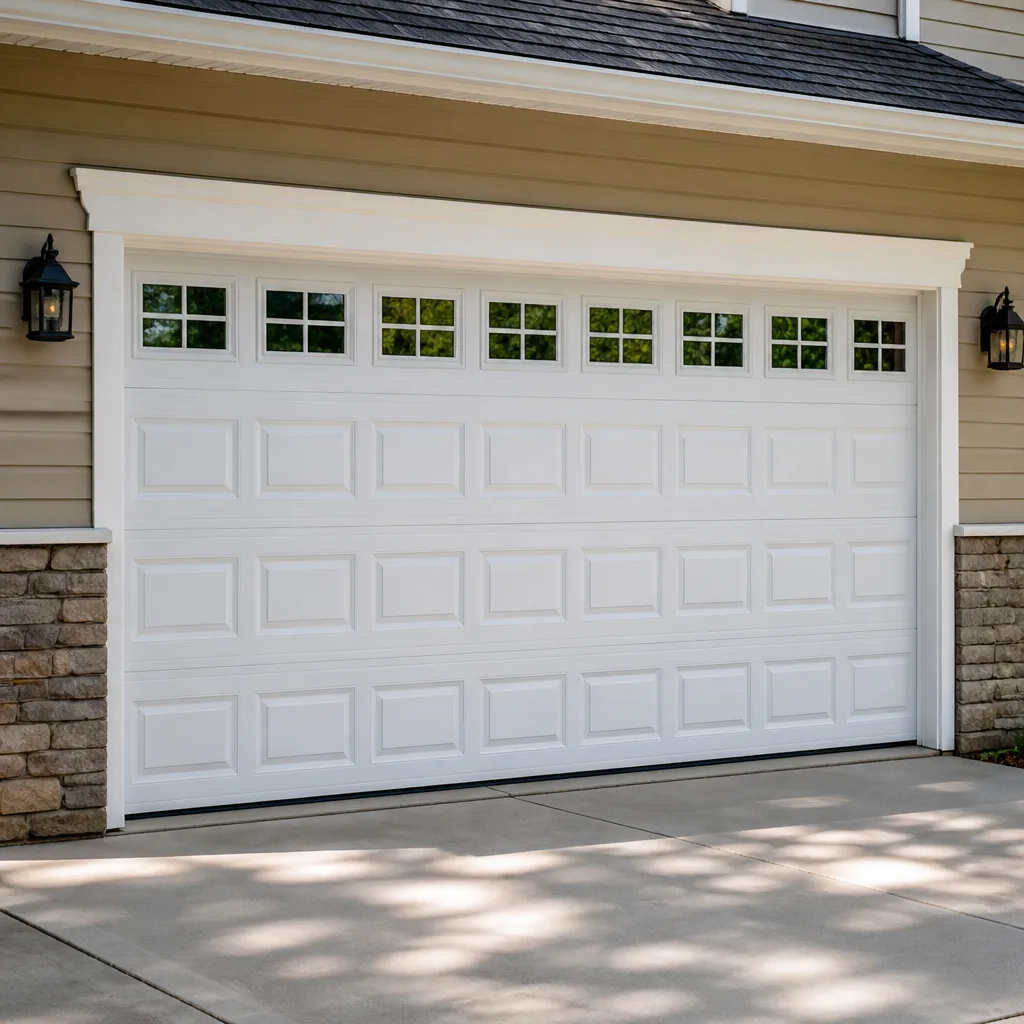 Raised-panel steel
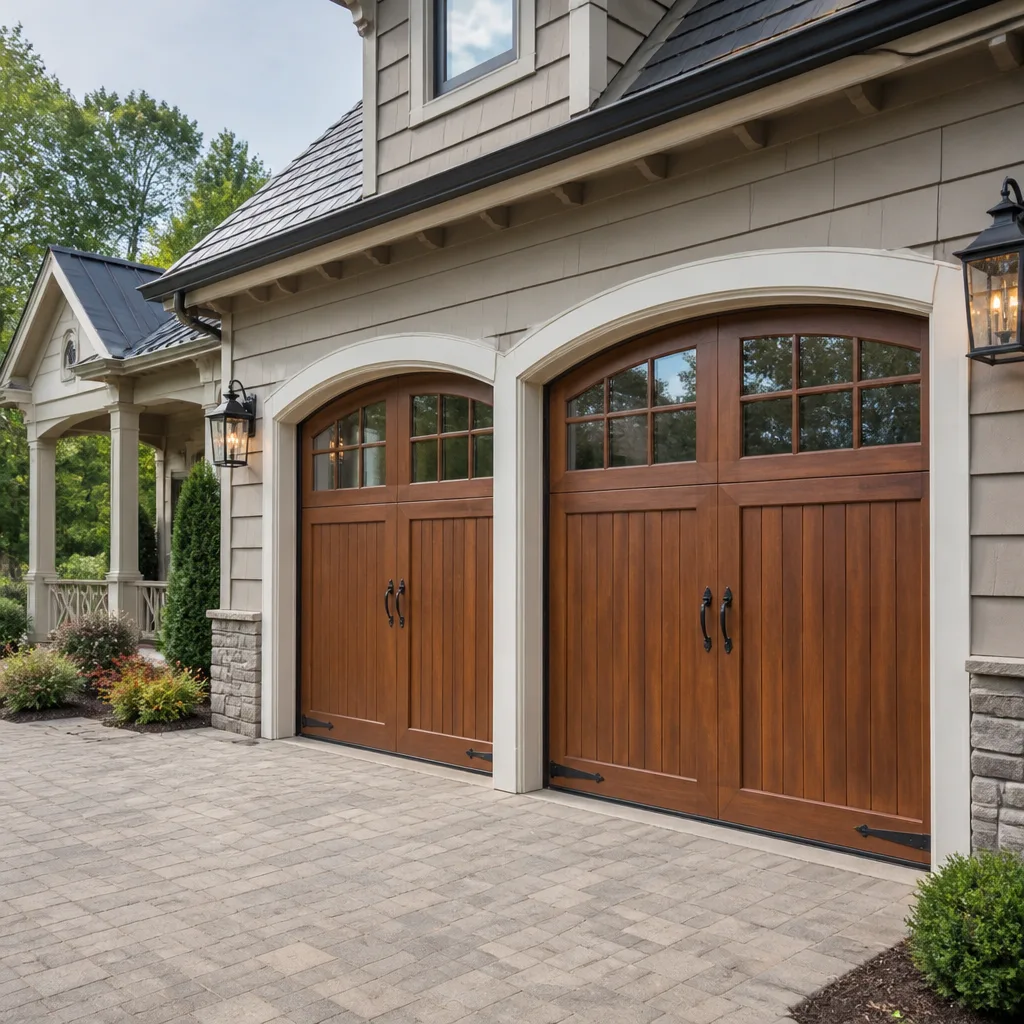 Carriage house
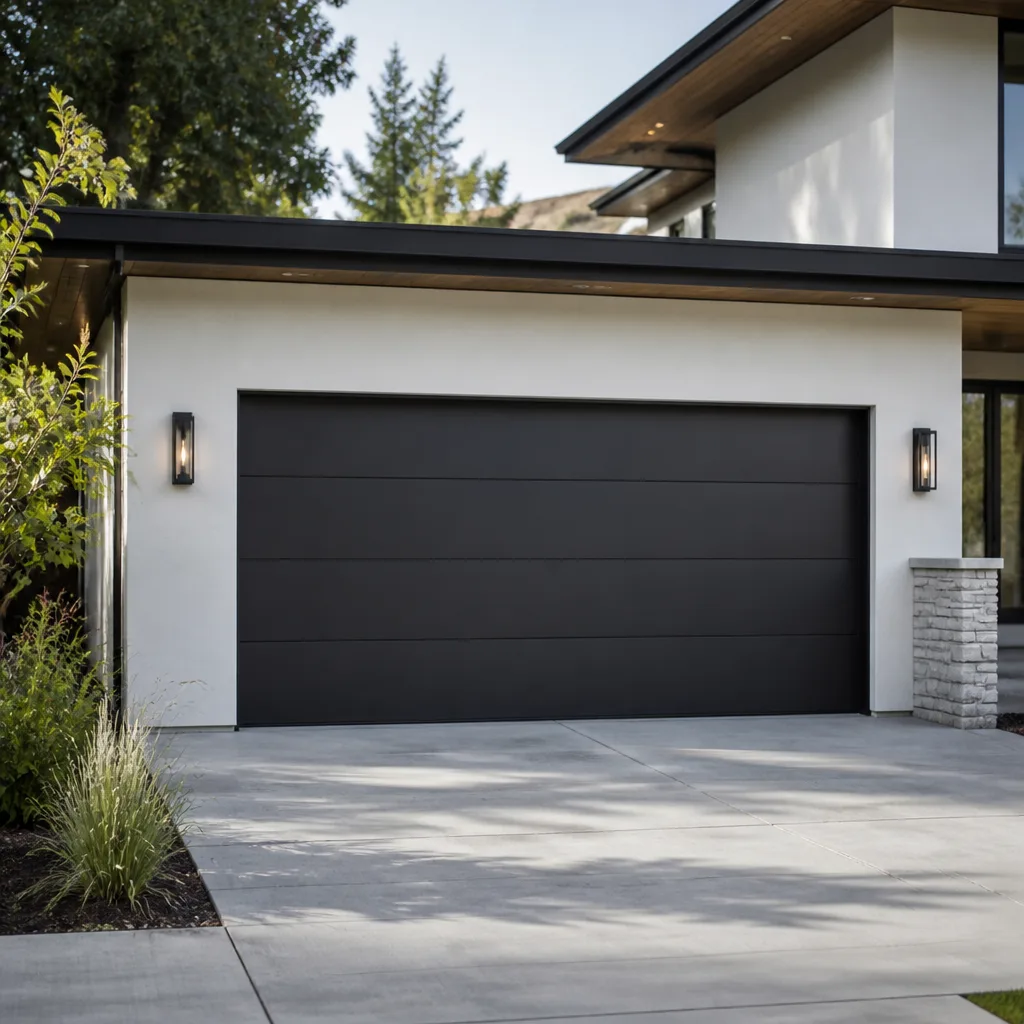 Modern flush
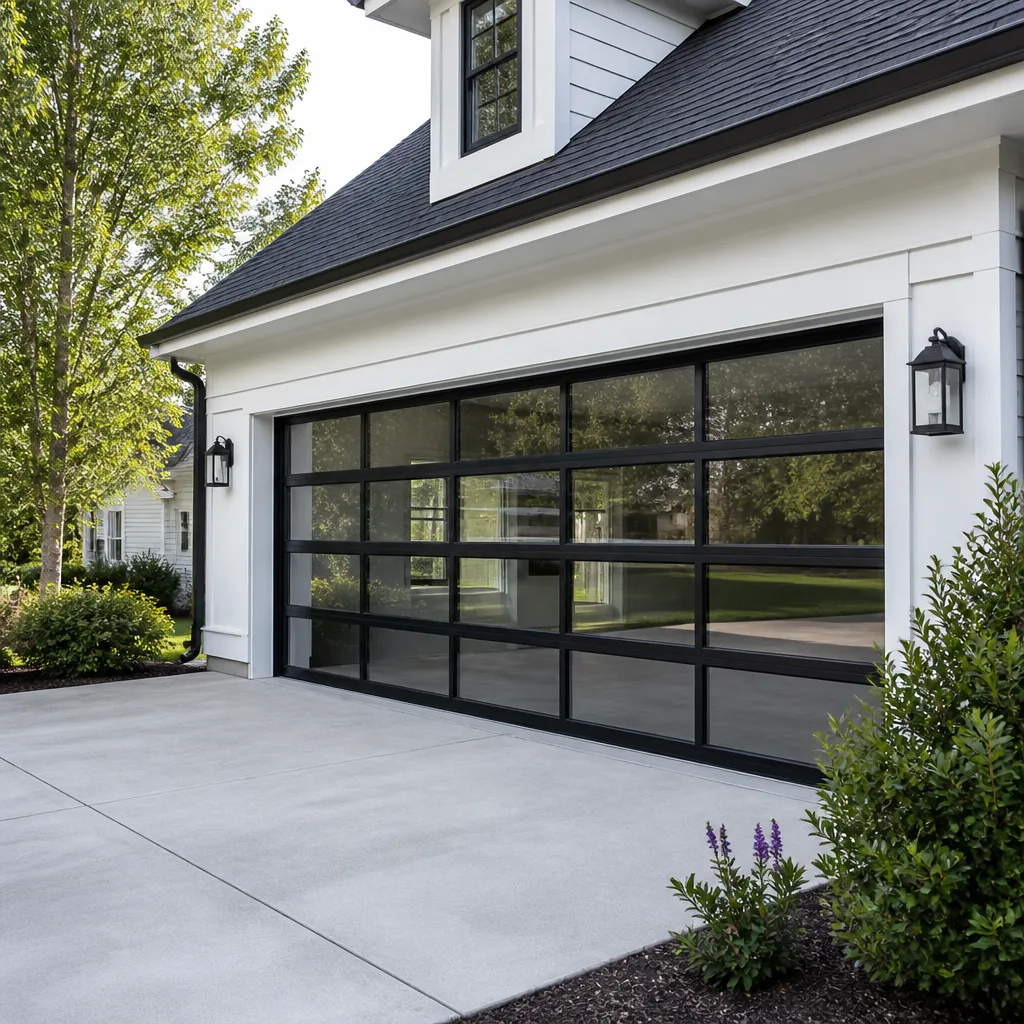 Full-view glass
 LiftMaster openers
 Chamberlain openers
Full 25-point door and opener safety check with every visit - springs, cables, rollers, tracks, and your LiftMaster or Chamberlain opener included
You get a price before we start. It does not change when the pro arrives.
Get your free estimateGarage Door Cost Breakdown: The Centennial Homeowner’s Reference for 2026
Two Centennial homeowners can get quotes for what sounds like the exact same job – “a standard 16×7 door replacement” – and see bids from $900 to $3,400. That spread looks like one contractor is gouging and another is cutting corners. Usually neither is true. The difference lives in three places most quotes never spell out: the spring system type and its cycle rating, the panel material and insulation grade, and whether your opener needs a full rail replacement or just a new head unit. Understand those three variables and a stack of wildly different bids suddenly becomes comparable. This guide breaks down what each component actually costs in the Centennial market for 2026, where the hidden charges hide, and how to tell a fair quote from a cheap one that costs more over ten years.
Quick Answer
A full garage door replacement in Centennial typically runs $900 to $3,400 for a 16×7 door, depending on spring type, panel material and insulation grade, and opener compatibility with your existing setup. A single spring repair usually costs $180 to $340, and a matched pair runs roughly twice that. The single biggest driver of quote spread isn’t labor – it’s the specification decisions buried in each bid. The written estimate should always set the final price, quoted and agreed before any work starts.
Styles & brands we work with
- Raised-panel steel
- Carriage house
- Modern flush
- Full-view glass
- LiftMaster openers
- Chamberlain openers
Table of Contents
- The Three Variables That Explain 90% of Price Differences
- Component-Level Cost Breakdown for Centennial
- Springs: Torsion vs. Extension and Why Cycle Rating Matters
- Insulation R-Value: Attached vs. Detached Garages in Centennial’s Climate
- Hidden Costs That Appear After the Job Starts
- Why Brand Familiarity Affects Your 10-Year Cost
- Same-Day and Emergency Premiums: When They’re Worth It
- How to Compare Quotes Fairly
The Three Variables That Explain 90% of Price Differences
When quotes for “the same door” land thousands of dollars apart, the gap almost always traces back to specification choices the homeowner never asked about. Here’s what to look for on any Centennial estimate.
- Spring system type. Torsion springs mounted on a shaft above the door versus extension springs running along the sides cost differently to buy, install and maintain. Torsion setups generally cost more up front and last longer. Extension springs are cheaper to install but can fail less gracefully and often need safety containment. A quote that doesn’t name the spring type is incomplete.
- Panel material and insulation grade. A single-layer steel door, a double-layer steel door with polystyrene cores, and a triple-layer door with polyurethane insulation are three very different products that all look identical in a brochure photo. Insulation grade adds cost but changes how the door performs in Centennial’s cold winters and hot summers.
- Opener compatibility. If your existing opener works with the new door, the cost is often just a head unit swap. If the new door’s weight or track geometry requires a new rail, the bill climbs. Your garage door opener repair conversation should start with whether your current opener is compatible before assuming a full replacement.
Once these three are named on paper, two bids are actually comparable. Without them, you’re comparing a Camry to a Camry with leather seats and a sunroof and wondering why the prices differ. We’ve seen homeowners in Centennial get burned by this exact confusion because the bids simply listed “16×7 door, installed” with no specification detail at all.
Component-Level Cost Breakdown for Centennial
Here’s what each piece of a typical Centennial garage door job costs in 2026, estimated as a range. Prices exclude any structural work on the opening itself, which we cover separately below. All figures are typical, and your written estimate will set the final price for your specific door.
| Component | Typical 2026 Cost (Centennial) | Notes |
|---|---|---|
| Single spring (repair or replace) | $180 – $340 | Price is for one spring. A matched pair is usually replaced together, so a pair runs about twice that. |
| Panel set (16×7, single-layer steel) | $550 – $1,100 | Plain finish, no insulation. |
| Panel set (16×7, insulated steel) | $1,000 – $1,900 | Adds structural rigidity and thermal separation. |
| Panel set (16×7, premium insulated with polyurethane core) | $1,400 – $2,400 | Higher R-value, heavier door, may need opener review. |
| Torsion spring system (full set, installed) | $320 – $640 | Higher cycle rating costs more. |
| Extension spring pair (installed) | $200 – $420 | Generally shorter lifespan than torsion. |
| Track set (full replacement) | $250 – $500 | Includes curved and vertical tracks plus hardware. |
| Opener (belt-drive, installed) | $400 – $750 | Head unit and rail. |
| Opener (chain-drive, installed) | $300 – $560 | Loud but durable; common in Centennial. |
| Labor (full door replacement) | $300 – $600 | Varies with track geometry and door weight. |
Notice the panel cost alone spans more than $1,000 from budget to premium. That’s the single biggest reason two quotes for “the same door” diverge. Our garage door installation estimates itemize the panel grade, spring type and opener compatibility on the page so you can compare like-to-like. When we quote a Centennial job, the number on the page is the number on the invoice – and it’s always agreed before we start.
Springs: Torsion vs. Extension and Why Cycle Rating Matters
Springs are the part of your door that does the actual heavy lifting, and they are the part homeowners ask us about least. Here’s how the two systems differ and why the cycle rating on the spring matters.
- Extension springs run along the horizontal tracks on either side of the door. They’re cheaper and simpler. They also stretch as they age and can fail without warning, which is why most modern installations include safety containment cables.
- Torsion springs mount on a shaft above the door and twist as they wind. They generally last longer, run quieter and are far more common on newer Centennial builds. They’re also more expensive to buy and install.
- Cycle rating is the number of open-and-close cycles a spring is rated for. A standard spring might be rated around 10,000 cycles; a high-cycle spring can be rated substantially higher. For a household that opens the door four times a day, a standard spring lasts roughly seven years. For a household that opens it ten times a day, it lasts about three.
The cycle rating is often the hidden difference between a $180 spring and a $320 spring in a Centennial quote. Both fit the door. Only one survives your family’s actual usage. Ask which rating you’re paying for.
A safety note. Torsion springs and the cables attached to them are under extreme tension. This is not a DIY repair. Losing control of a wound torsion spring can cause serious injury, so spring work belongs with a trained technician, not a weekend project. If you hear a loud bang from the garage and the door won’t lift, don’t pull the manual release and don’t try to lift the door yourself. That’s a spring failure and it needs a technician.
Insulation R-Value: Attached vs. Detached Garages in Centennial’s Climate
Insulation is the option that gets sold the hardest and understood the least. Whether the upgrade pays back depends entirely on one thing: is your garage attached to the house, or detached?
- Attached garage. In Centennial, an attached garage shares at least one wall and often a ceiling with conditioned living space. Insulating the door reduces heat loss through that shared boundary, keeps the garage a few degrees warmer, and can noticeably reduce drafts in rooms above and beside the garage. For many attached garages, the upgrade has a plausible payback over the door’s life.
- Detached garage. A detached garage in Centennial is thermally isolated from the house. Insulating the door keeps the garage itself more comfortable and protects stored items from extreme temperature swings, but it doesn’t directly lower the heating bill on the other side of the yard. The upgrade is worth it if you use the garage as a workspace or store temperature-sensitive equipment. Otherwise, budget-grade insulation may make more sense.
How to calculate whether the upgrade pays back for your specific home: start with the square footage of the garage door. Compare the R-value of your current door against the R-value of the door you’re considering. Then estimate how much of your home’s heating or cooling actually escapes through the garage boundary. For an attached garage, that share is meaningful. For a detached garage, it’s close to zero. If the math is fuzzy, the honest answer is that the upgrade is a comfort and durability purchase, not a strict payback purchase. That distinction keeps the sales conversation grounded in what actually helps the homeowner.
Hidden Costs That Appear After the Job Starts
This is where a $1,400 quote becomes a $2,100 invoice, and it’s the single biggest source of complaints in our industry. Every item below should be checked during the free measure, not discovered mid-job.
- Corroded drums. The cable drums at the top of the tracks can rust or wear in older doors. New springs on old drums are a false economy – the drum fails and takes the new spring with it. A thorough measure checks the drums before the quote is written.
- Out-of-square rough openings. Particularly in older Centennial developments where framing has settled, a rough opening that’s out of square means the new door won’t fit cleanly without shimming, reframing or both. That adds labor.
- Non-standard header heights. Some older homes have garage rough openings that aren’t quite 7 feet or 8 feet. Standard doors don’t always fit cleanly, and the fix can be a custom panel order.
- Worn track. If the tracks are bent, dented or misaligned, a new door on old track will perform badly. Track replacement should be quoted as an add-on before the job starts, not after.
- Opener age. An opener that’s near the end of its life will fail within months of a new door being installed. Better to know up front.
We prevent this by measuring the opening, inspecting the drums, checking the track and testing the opener on the free estimate visit. That’s the entire point of the free measure – to see the job clearly before writing a number. When we quote a Centennial garage door repair, the price is quoted and agreed before any work starts, so a surprise invoice isn’t possible.
Why Brand Familiarity Affects Your 10-Year Cost
Here’s a factor almost no guide talks about: the cheapest installation can turn out to be the most expensive decision over ten years, and the reason is brand-familiarity on the parts side.
Garage door openers and doors aren’t generic. A LiftMaster opener and a Genie opener use different logic boards, different safety sensor protocols and different remote frequencies. A Clopay door’s panel profiles and track geometry don’t interchange with a Wayne Dalton. When a technician walks into a garage with a Garage Door Repair Centennial Pros van, we already know which brand is in front of us. We work on the brand in your garage, including LiftMaster, Chamberlain, Genie, Clopay, and others common across Centennial.
Where this shows up in your wallet:
- Parts availability. Brand-familiar technicians source correct-fit parts quickly. A generalist spends hours tracking down an odd-shaped bracket or waits for a shipment while your door sits dead.
- Diagnosis speed. A LiftMaster not closing usually isn’t the logic board; a Genie opener with a slow reverse can often be a sensor alignment issue. Knowing the brand’s quirks means a first-visit fix, not a return visit billed twice.
- Upgrade path. If you want to add a battery backup, WiFi module or smart-home integration, brand-familiar technicians know which will actually work with your existing head unit and which will require replacement.
This is why some garages effectively get cheaper over time – every service call is quicker and better-targeted. Cheap installs from crews that install once and disappear leave the homeowner sourcing parts and labor from whichever brand-agnostic generalist answers the phone. Compare not just the installation price but who is going to maintain the door in year three and year eight.
Same-Day and Emergency Premiums: When They’re Worth It
Half the questions we field at Garage Door Repair Centennial Pros are about whether an urgent call is worth it. Here’s the honest split.
Same-day and emergency pricing exists because the business absorbs real cost to jump a job. It’s not a markup for convenience – it reflects reordered schedules, additional technician hours and prioritization. When it’s worth it:
- Your car is trapped in the garage and you have somewhere to be.
- The door is stuck open and the house is unsecured.
- The door won’t close at all and you’re leaving for a trip.
- A spring snapped and you can hear cables under tension.
When it isn’t worth the premium:
- A noisy door you’ve been meaning to fix for months.
- A door that goes up and down fine but the opener remote stopped working.
- A cosmetic issue – a dinged panel, a worn weather seal, a rattly track.
We know the difference between a real emergency and a scheduled repair, and we’re honest about it. A general garage door repair that can wait typically costs less because standard scheduling can be planned efficiently. For real emergencies, we can help with garage door repair quickly because spring work and opener work are done in-house, not outsourced. Call (844) 575-1130 and we’ll tell you honestly which category your job falls into and what it will cost before we dispatch.
How to Compare Quotes Fairly
A fair comparison means every quote names the same nine items. Ask each contractor for all nine in writing:
- Panel material – steel, aluminum, wood-look or composite – and whether it’s single, double or triple layer.
- Insulation type (polystyrene or polyurethane) and R-value, if insulated.
- Spring type – torsion or extension – and the cycle rating on the spring.
- Whether the drums, cables and bearings are included or extra.
- Track: reused or replaced.
- Opener: new head unit only, head unit plus rail, or full opener installation.
- Labor – flat fee or itemized.
- Warranty terms on parts and on labor separately.
- Whether the price is fixed or subject to a post-inspection review.
An item that’s missing on one quote and specified on another is where the $900-vs-$3,400 gap lives. Our technicians have up to 15 years of experience and can walk through any quote you’re holding and tell you exactly what’s missing. Free estimates in Centennial start with that conversation.
Common Mistakes to Avoid
- Comparing one-line quotes. A quote that says “16×7 door, installed, $1,200” hides the spring type, panel grade and whether track is included. Without those three, you aren’t comparing anything. Ask for the itemized list above on every bid.
- Chasing the lowest spring price. In Centennial, a $180 spring and a $320 spring both fit your door. The cheap one is often a low-cycle spring that fails within a few years. You’ll pay for the spring again before you’ve gotten value from the first one.
- Insulating a detached garage for the wrong reason. Insulation in a detached Centennial garage is a comfort and equipment-protection purchase, not a heating-bill payback. Buy it for the right reason and it’s a good decision. Buy it expecting payback and you’ll feel shortchanged.
- Skipping the free measure. Every hidden cost in this guide – corroded drums, out-of-square openings, non-standard headers – is caught by measuring before the job starts. If a contractor quotes over the phone without measuring, the quote isn’t a real quote.
- Assuming your existing opener works with a new door. Insulated doors weigh significantly more than single-layer doors. An opener sized for a thin door will struggle or fail outright with a triple-layer door. Check the opener’s lift rating against the new door’s weight during the measure.
- Treating same-day as the default. Same-day and emergency pricing exists for real failures – trapped car, door won’t close, snapped spring. For planned replacements, take the standard schedule. You’ll pay less and get a better measure.
- Ignoring your opener brand. A LiftMaster, Chamberlain or Genie opener has brand-specific logic that a knowledgeable technician can diagnose quickly. A brand-agnostic crew may spend two visits figuring it out – and you pay for both.
See the difference
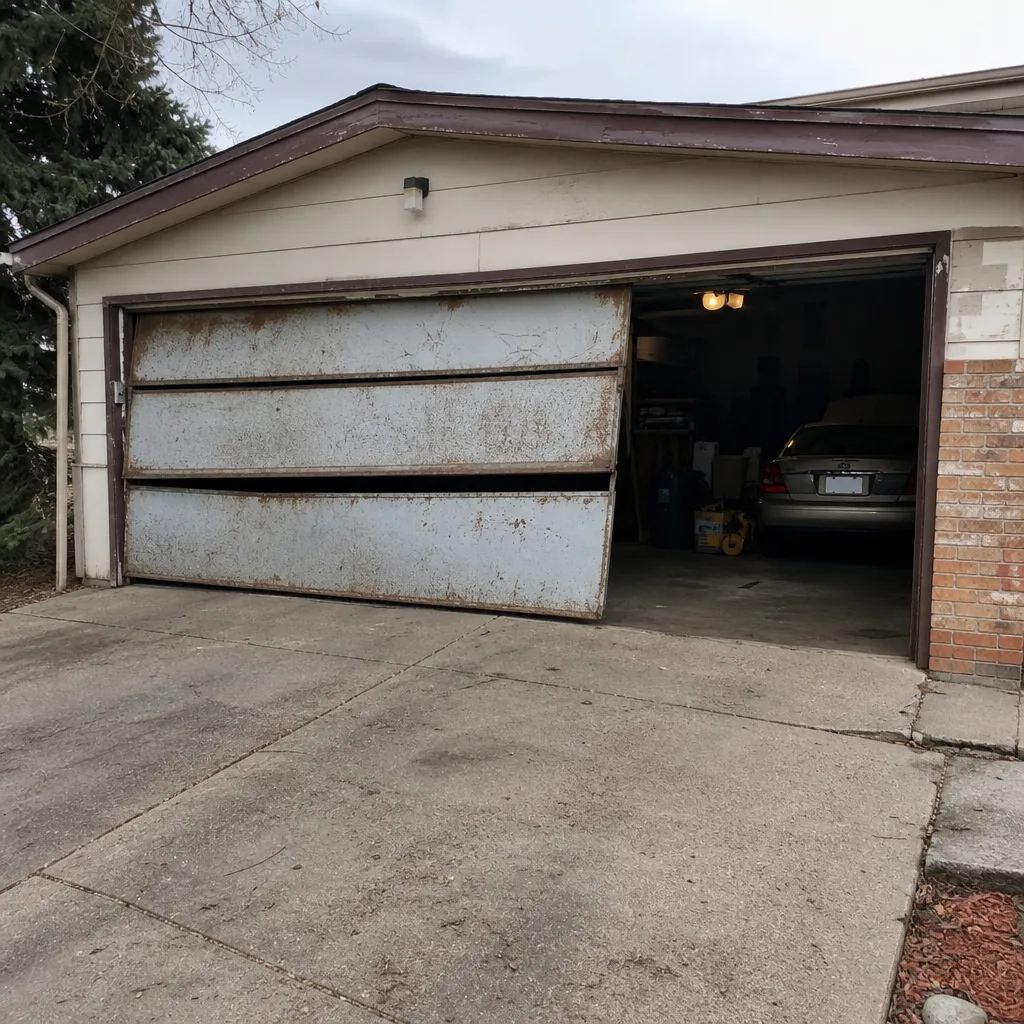 Before
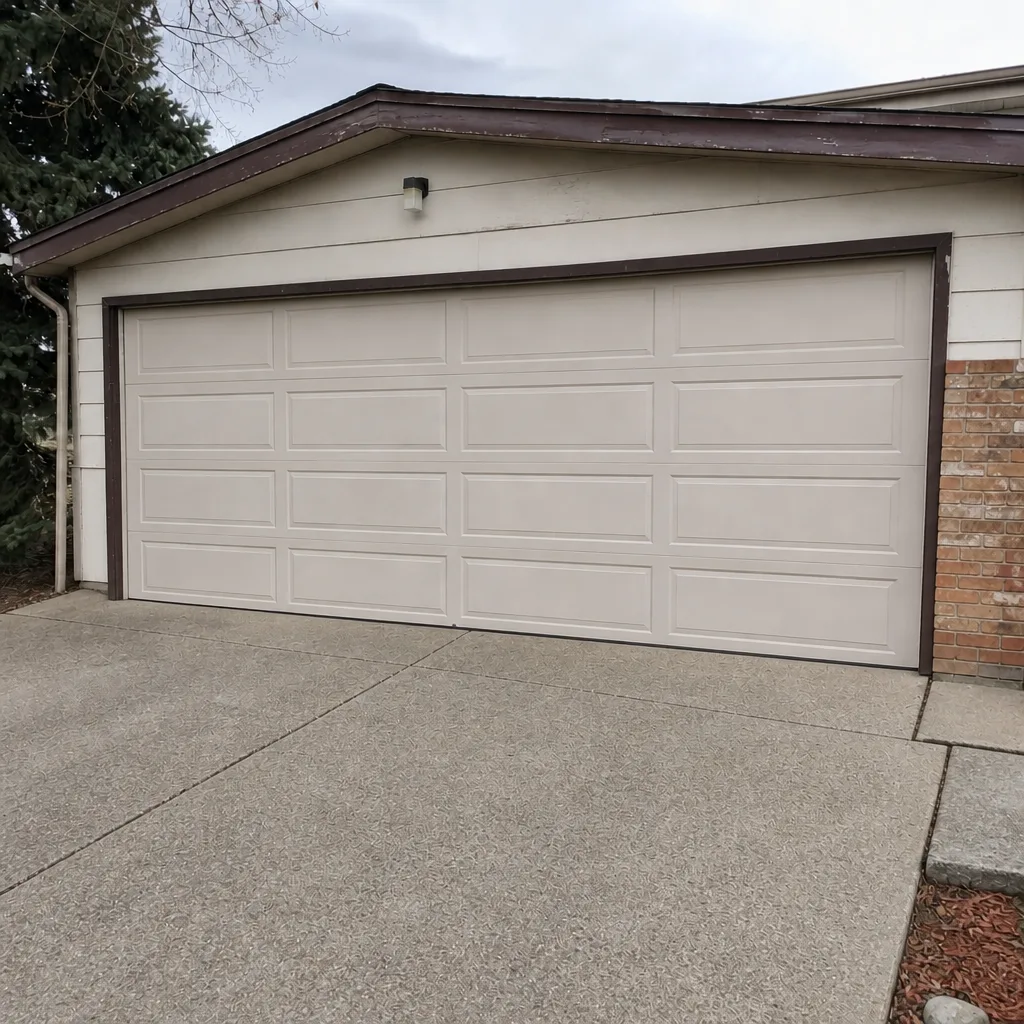 After
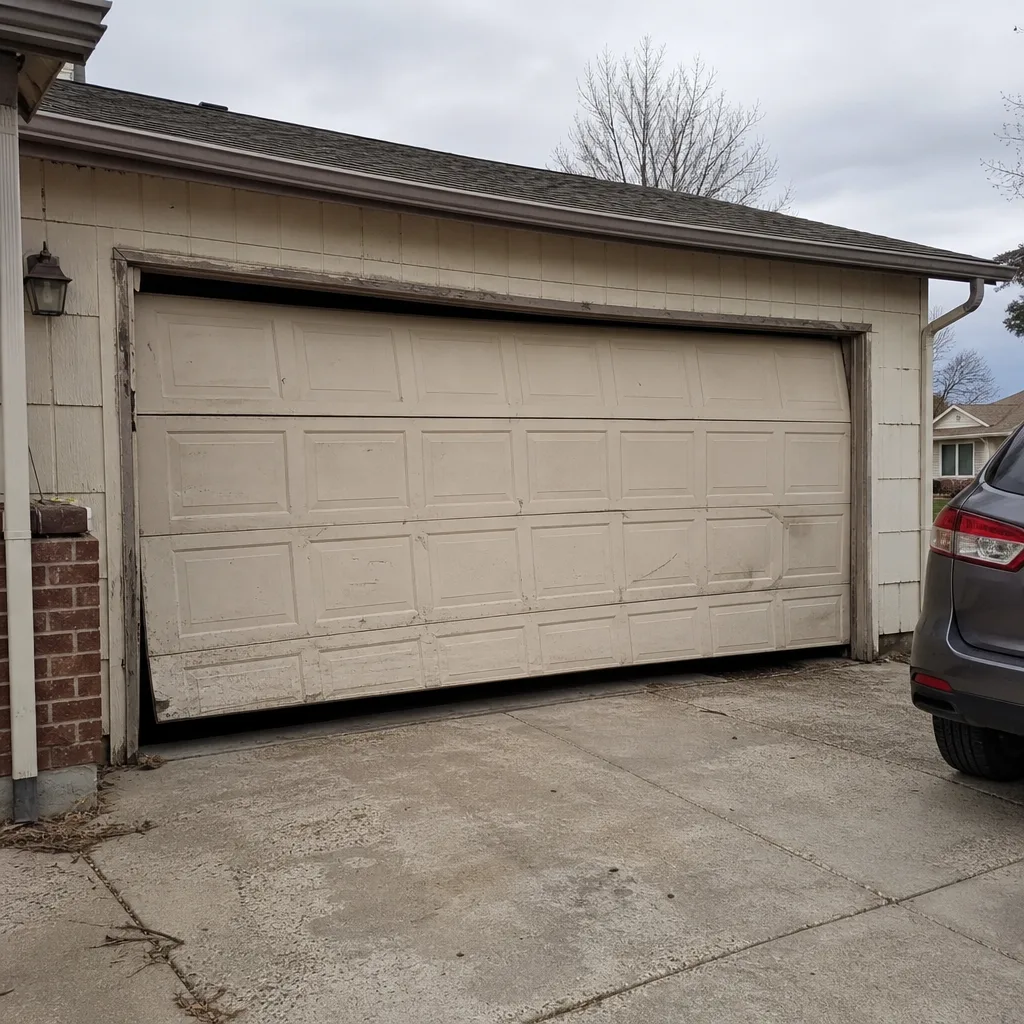 Before
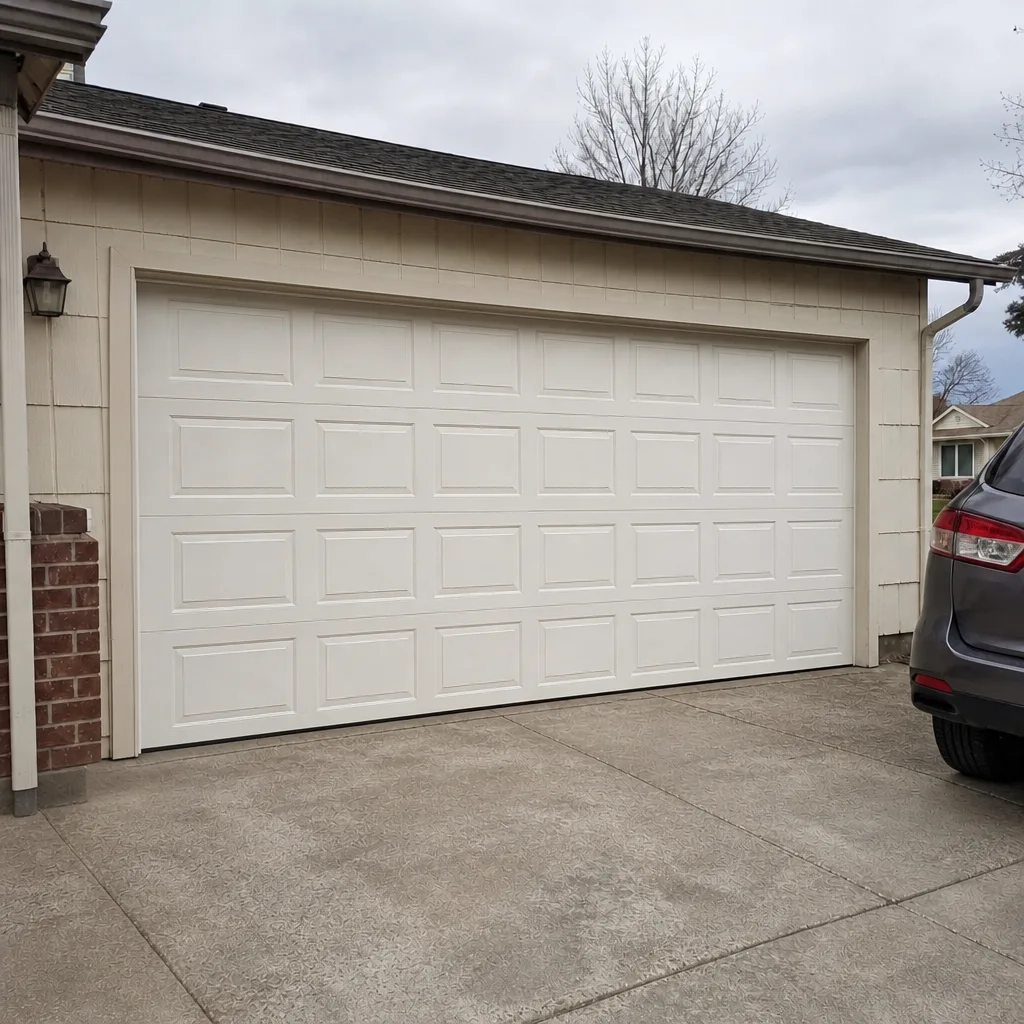 After
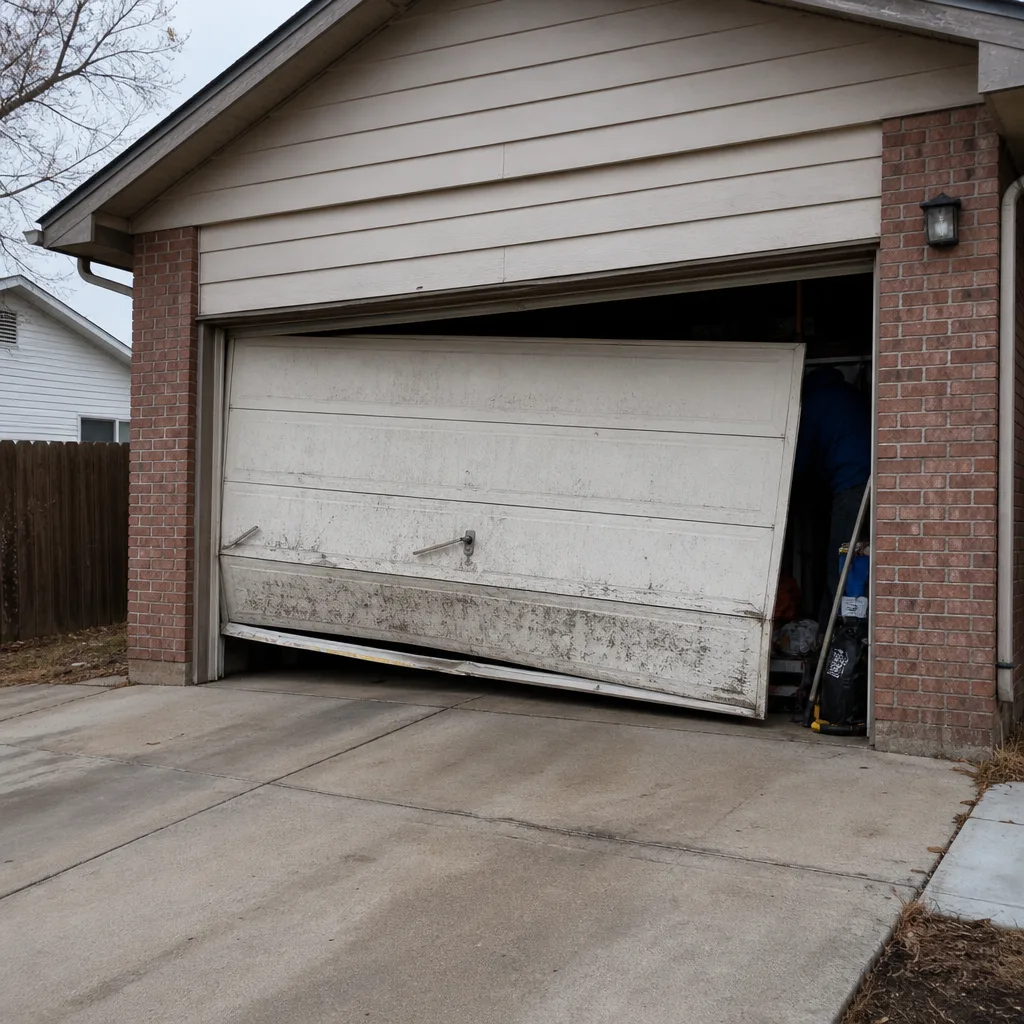 Before
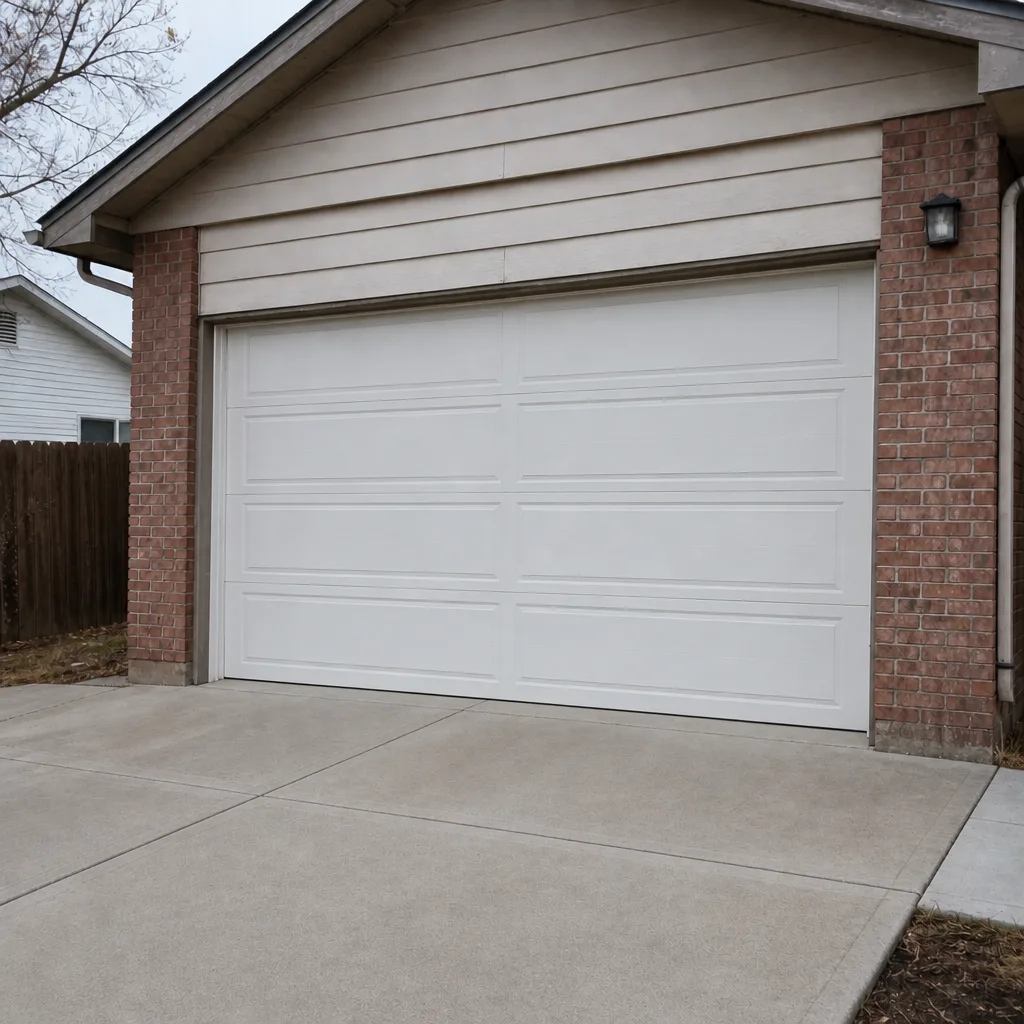 After
When to Call a Professional
Some garage door issues are simple. A rattly track, a worn weather seal or a door that’s slow to reverse can often be a minor adjustment. But when a spring snaps, a cable comes off a drum, a door comes off one of its tracks, or the door won’t close at all, stop and call a trained technician. Garage doors and their openers are heavy, spring-loaded mechanical systems that will cause serious injury if handled without proper training. In Centennial, if you hear a loud bang from the garage and find the door half-lifted, don’t attempt to pull the manual release – call us first.
Garage Door Repair Centennial Pros offers free estimates in Centennial – call (844) 575-1130 to schedule a measure, get an itemized quote, and know what the job will actually cost before anyone touches the door. Every price is quoted and agreed before any work starts. We work on eight major brands including LiftMaster, Chamberlain, Genie, Clopay, Amarr, Wayne Dalton, Craftsman and Raynor, and our technicians have up to 15 years of experience.
Frequently Asked Questions
A full 16×7 garage door replacement in Centennial typically costs $900 to $3,400, depending on spring type, panel material and insulation grade, and opener compatibility. The spread is driven almost entirely by those three specifications, not by labor. The written estimate sets the final price. Call (844) 575-1130 for a free itemized estimate – estimates are free.
Repair is almost always cheaper for a single failed component. A spring repair runs $180 to $340 for one spring, where a full replacement runs into the thousands. Replacement makes more sense when multiple components fail together (panels plus springs plus track), when the door is out of warranty and the repair cost exceeds half the replacement cost, or when you’re upgrading insulation. Call (844) 575-1130 and we’ll give you an honest answer for your specific door – estimates are free.
That depends on the cycle rating on the spring, not on its age. A standard spring rated for around 10,000 cycles lasts about seven years if the door opens four times a day, or about three years if it opens ten times a day. Centennial’s cold winters put extra stress on springs, so high-cycle springs are usually worth the extra cost. Call (844) 575-1130 to get a cycle rating quoted for your door.
Most cities require a permit for structural work on a garage door opening, but the rules vary and we can’t tell you what Centennial’s current permit rules are without checking. Call your city’s building department before scheduling the job – it’s a short call and it will tell you exactly whether a permit applies. Call (844) 575-1130 if you want us to walk through what we typically see on a Centennial garage door project.
Because they’re usually not the same door. A $900 quote and a $3,400 quote for a “standard 16×7 door” often differ only in spring type (extension vs. torsion), insulation grade (single-layer vs. polyurethane-cored), and whether the opener needs a full rail replacement or just a head unit. Ask every contractor to itemize those three on the quote. Call (844) 575-1130 and we’ll help you compare what you’re holding – estimates are free.
Yes, we offer same-day and emergency garage door service in Centennial for time-sensitive failures – a snapped spring, a door stuck open or a car trapped inside. Standard scheduled work is priced lower because the day can be planned efficiently. Call (844) 575-1130 and we’ll tell you honestly whether your situation is a same-day call or can wait – estimates are free.
The Bottom Line
Garage door pricing in Centennial isn’t really inconsistent once you see what’s under the hood. The three variables – spring type, panel grade and opener compatibility – account for nearly all of the spread between two quotes for “the same door.” Ask every contractor to itemize those on the quote, plus the nine comparison points in the section above. Understand that insulation payback depends on attached vs. detached, that a cheap spring usually costs more over ten years, and that the free measure is where hidden costs get caught. Same-day and emergency pricing is real value when your car is trapped and money wasted when a door rattle can wait until next week. Compare specifications, not just prices, and the cheapest quote is easy to spot for what it usually is. Call (844) 575-1130 for a free, itemized estimate in Centennial – quoted and agreed before any work starts.
Written by the team at Garage Door Repair Centennial Pros.