Last updated November 22, 2026
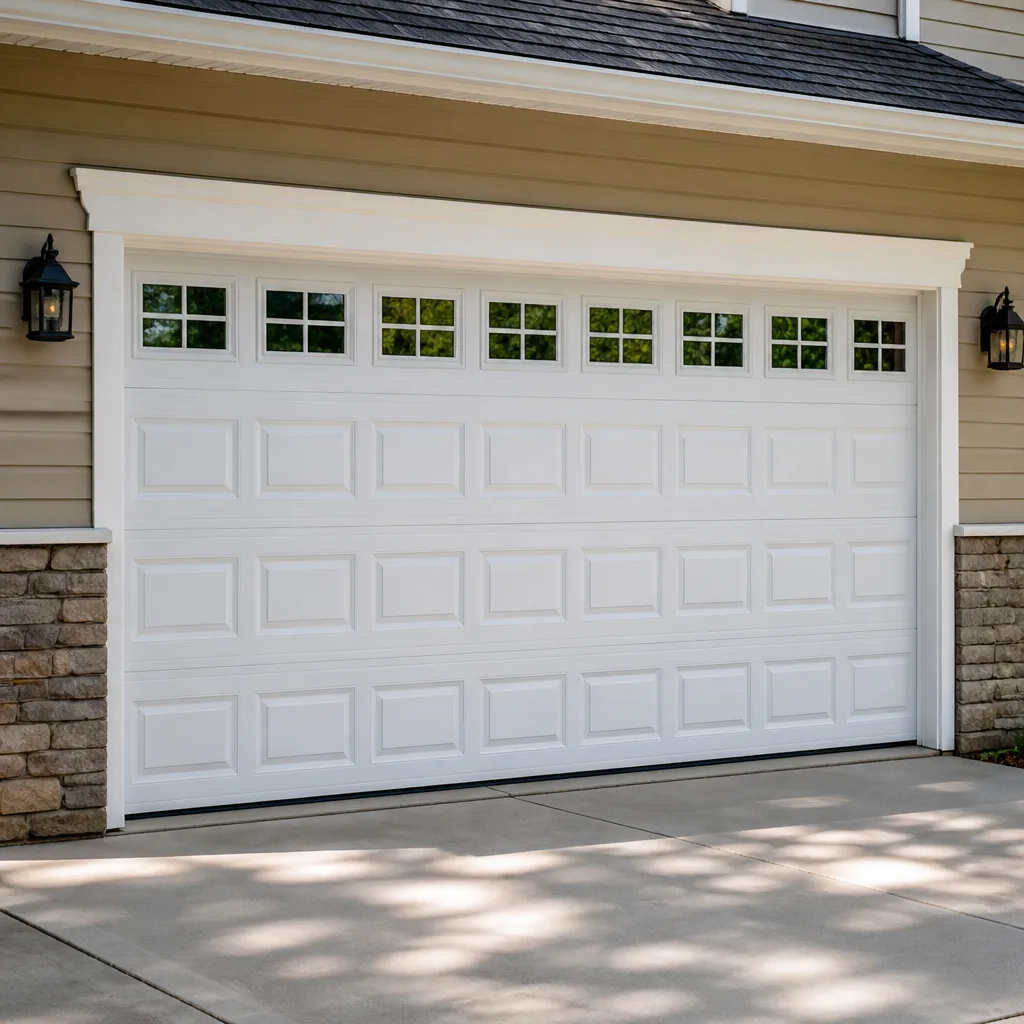 Raised-panel steel
 Carriage house
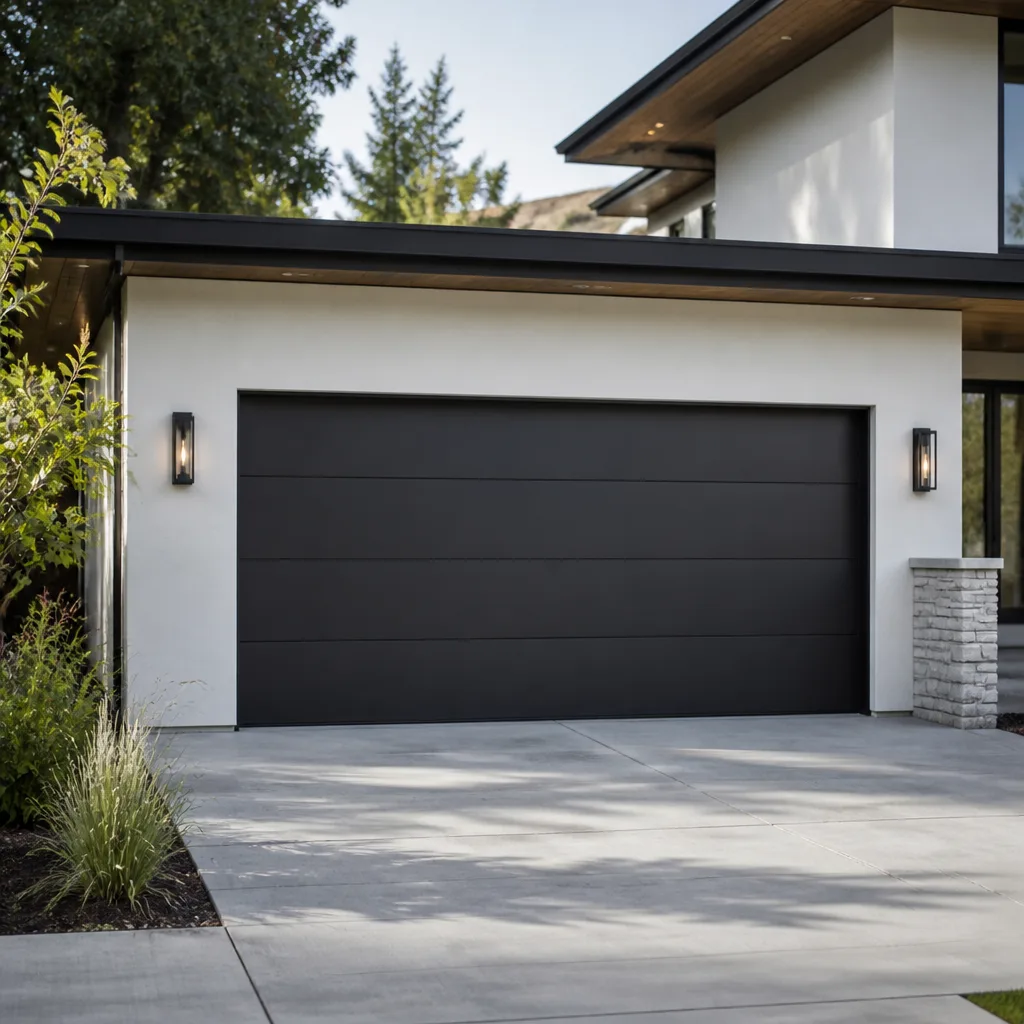 Modern flush
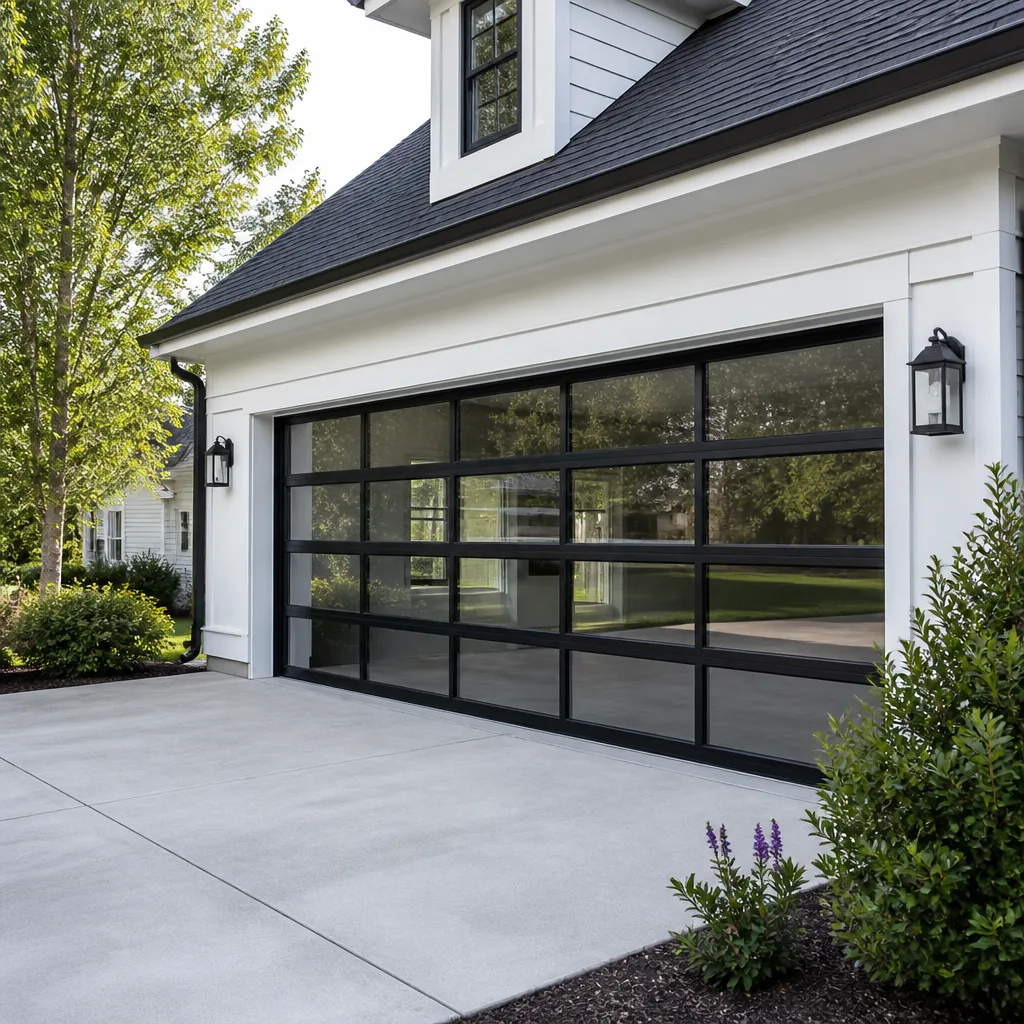 Full-view glass
 LiftMaster openers
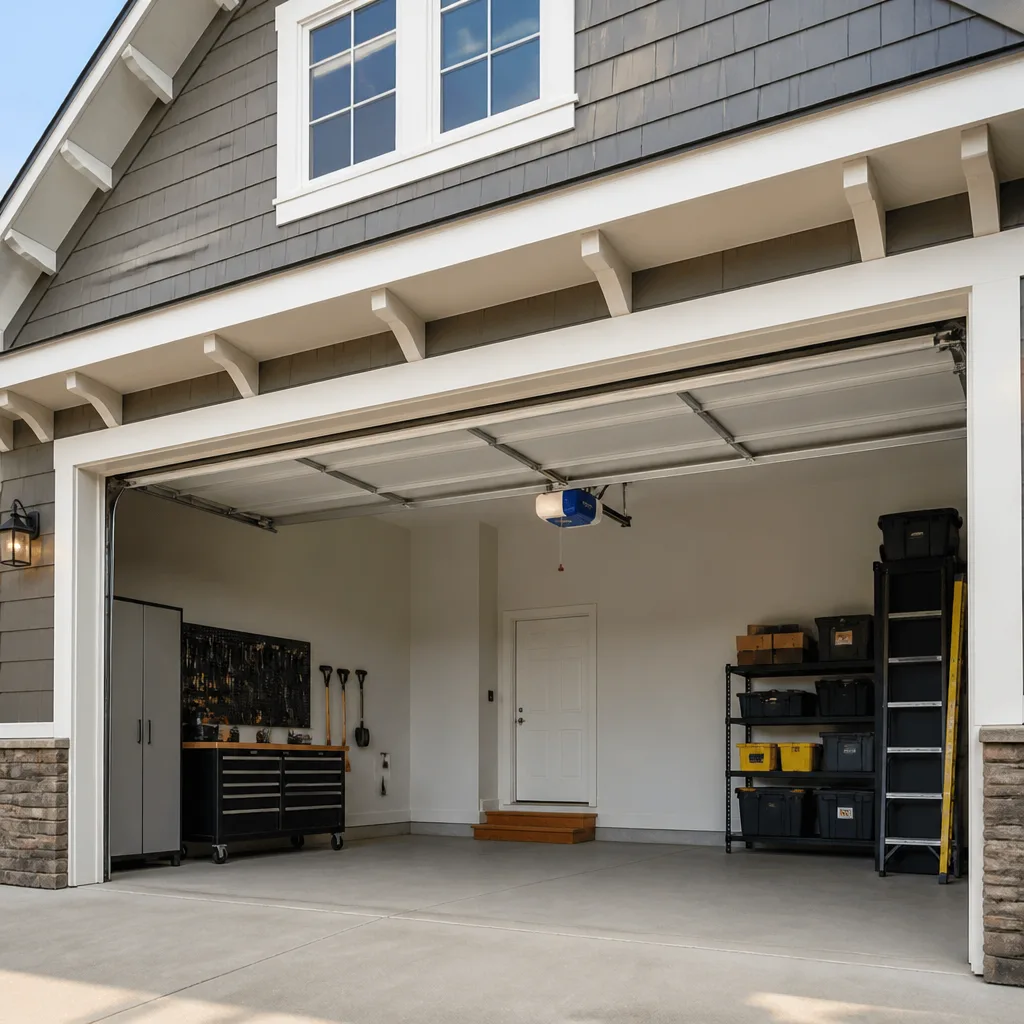 Chamberlain openers
Full 25-point door and opener safety check with every visit - springs, cables, rollers, tracks, and your LiftMaster or Chamberlain opener included
You get a price before we start. It does not change when the pro arrives.
Get your free estimateGarage Door Warning Signs: A Centennial Homeowner’s Reference Guide
A garage door that hesitates for half a second before it moves isn’t almost fine. It’s a door that has already begun compensating for a mechanical deficit, and that compensation has a finite number of cycles before it stops working altogether. Most failures we get called out for in Centennial didn’t start that morning. They started weeks or months earlier, with a symptom the homeowner read as cosmetic or heard and dismissed. This guide maps every common warning sign to the component it implicates, sorts the signs into danger tiers so you know what means stop and what means watch, and explains why Centennial’s cold mornings hide spring fatigue until the damage is done.
Quick Answer
The most urgent garage door warning signs in Centennial are a door that reverses before closing, a snapped spring (you’ll hear a loud bang), a visibly frayed or kinked cable, and any door that comes down faster than it should. Those are stop-use-now problems. Slower warning signs worth monitoring include grinding or popping noises, rollers that look flat or worn, and an uneven gap along the floor. Cold weather in Centennial masks spring fatigue, which is why so many spring failures happen on the first genuinely cold morning of the season.
Styles & brands we work with
- Raised-panel steel
- Carriage house
- Modern flush
- Full-view glass
- LiftMaster openers
- Chamberlain openers
Table of Contents
- Why Warning Signs Follow a Progression
- Symptom-to-Cause: What Each Sound Is Telling You
- Visual Warning Signs Homeowners Misread as Cosmetic
- The Danger Tier: Stop Using the Door vs. Monitor It
- How Centennial Cold Mornings Mask Spring Fatigue
- Opener Behavior That Signals a Problem in the Door
- A Ten-Minute Monthly Check You Can Do Safely
- Brand-Specific Quirks Worth Knowing
Why Warning Signs Follow a Progression
Garage doors fail in stages, and the stage tells you how much time you have. Think of it as a sequence: first the mechanism starts working harder than it should, then it starts compensating, and finally it stops compensating. A door that hesitates before it moves is in the second stage. The opener is pushing through resistance that shouldn’t be there, and the motor, the springs, or the cables are absorbing that extra effort somewhere. That arrangement works for a while. It has a finite number of cycles.
We see the pattern constantly on garage door repair calls around Centennial. The homeowner describes a door that was “a little slow for a while” and then stopped entirely. Almost every time, the original symptom was there for weeks before the failure.
Here’s how the progression usually runs:
- Stage one: increased effort. The door is heavier than it should be, or the track is binding, or a roller has flattened. Nothing has failed yet. The door still works, but it works harder.
- Stage two: compensation. The opener adjusts. It pushes longer, pulls harder, or the door hesitates before it engages. You may hear a change in sound, or the door may move unevenly. This is the stage where a homeowner says “it’s fine, it’s just old.”
- Stage three: failure. A spring snaps, a cable lets go, the opener burns out, or the door comes off track. This stage usually arrives without further warning.
The useful insight is that stage two is your window. A door in stage two gets repaired on a normal schedule. A door in stage three becomes an emergency call, and in Centennial, an emergency call often means a car trapped in the garage or a house left open until someone can get there.
Symptom-to-Cause: What Each Sound Is Telling You
The sound a door makes points at a specific component. Here is the mapping we use on diagnostics, and it’s the same mapping you can apply yourself before you call anyone.
- Grinding, low and continuous. Usually a roller that has seized or a hinge that has worn through. The metal-on-metal contact is happening at the roller or the hinge plate, not in the opener.
- Popping or a sharp crack during travel. A torsion spring that has a partial break, or a hinge that has pulled loose from the panel. Popping that repeats at the same point in the travel points at the track or a hinge; popping that happens once and then the door stops is typically a spring.
- Scraping along the floor or the frame. The door is out of alignment, a panel has shifted, or the bottom seal has torn and is dragging. Scraping against the frame is a track alignment problem.
- Rhythmic clicking that speeds up with the door. Something is rotating and striking at a regular interval: a roller with a flat spot, a cable riding the drum incorrectly, or a worn bearing plate.
- A single loud bang from the garage, with the door no longer lifting. That’s a torsion spring snapping. It’s the most common complete-failure sound in Centennial, and it’s a stop-use situation.
One sound not on this list is worth flagging: a door that gets quieter. A door that used to rattle and now moves silently often has a roller or hinge that has worn past contact rather than been repaired. Quiet isn’t always good. Listen for the change in either direction.
An opener that runs but produces no door movement is a different symptom set entirely. If you can hear the motor engaging and the door doesn’t move, the issue may be in the opener’s drive or in a failed spring or cable that has left the door disconnected from the opener’s effort. That’s a garage door opener repair question, but it’s also a door-mechanism question, which is why we look at both sides before we diagnose. A Chamberlain or Genie unit that runs and doesn’t lift is often a healthy opener with a failed door attached to it.
Visual Warning Signs Homeowners Misread as Cosmetic
Most of the visible warning signs on a garage door get read as cosmetic. A slightly frayed cable looks like a small thing. A roller with a flat spot looks like normal wear. They aren’t cosmetic; they’re stage two, and they’re the cheapest moments to act.
Cable fraying. Look at the cables that run down each side of the door to the bottom bracket. A healthy cable is a continuous smooth strand. A cable with broken individual strands, a kink, or a section that looks like a frayed rope is compromised, and cables should be treated as load-bearing. There’s no such thing as a slightly frayed cable that’s fine. Cables are under the same tension as the springs; when one fails, the door can drop.
Roller wear tracks. Rollers are the small wheels that ride in the track. A healthy roller is round and quiet. A worn roller has a flat spot, a visible seam, or a wobble when the door moves. Rollers wear from the inside out, so a roller that looks fine but sounds bad is already worn. Rollers are inexpensive to replace and they’re a common cause of grinding that gets misdiagnosed as a spring problem.
Uneven gap at the floor. Close the door and look at the gap between the bottom seal and the floor. A consistent small gap is normal. A gap that’s wider on one side than the other means the door is out of level, a cable has stretched unevenly, or a spring has lost tension on one side of a two-spring system. This one gets misread as a seal problem. The seal is usually a symptom, not the cause.
Panel separation and denting. A panel that has separated from its neighbor at a seam, or a bottom panel that’s dented and no longer sitting flush, changes the door’s weight distribution. A dented bottom panel adds resistance that the springs weren’t set for.
Track deflection. Run a hand along the inside of each track (with the door closed and the opener off). A track that has a bend, a gap at a bracket, or a section that’s visibly bowed will bind the rollers and force the opener to compensate.
The Danger Tier: Stop Using the Door vs. Monitor It
The most important decision in this whole guide is whether a warning sign means stop or means watch. The dividing line is straightforward: anything under tension, anything that could drop the door, and anything electrical means stop. Cosmetic wear and noise without a tension failure can usually be monitored, but monitored means you’re watching it, not ignoring it.
Stop using the door immediately if you see or hear:
- A snapped torsion spring (loud bang, door won’t lift).
- A frayed, kinked, or broken cable.
- The door reversing before it closes, or closing faster than normal.
- A door that has come off track or is visibly crooked in the opening.
- A door that lifts only partway and then stops.
- Any door that moves on its own when the opener is disengaged.
Monitor, and schedule a repair on a normal timeline, if you notice:
- Grinding or squeaking that’s consistent and hasn’t changed.
- A worn roller with a visible flat spot.
- A slightly uneven floor gap that isn’t getting worse.
- Slower travel with no reversal and no noise change.
- Cosmetic dents that haven’t changed the door’s movement.
One safety note that overrides everything in this section: springs and cables are under extreme tension, and this is not a DIY repair. Even a door in the monitor tier that shows any sign of tension loss should be looked at by a trained technician before you keep cycling it. Our own spring work is handled in-house because of that risk, and many general handymen won’t touch it for the same reason.
How Centennial Cold Mornings Mask Spring Fatigue
Springs fail most often in winter, and Centennial’s cold mornings are the reason. A spring that’s already lost some of its tension works differently at different temperatures. Cold metal is less elastic than warm metal. In a heated garage or on a warm afternoon, a fatigued spring may still have just enough stored energy to lift the door. On a cold morning, it doesn’t. The door feels heavy, hesitates, or the opener strains, and the failure that was already coming arrives on the coldest morning of the week.
What that means for a Centennial homeowner is that the warm-weather performance of your door is not a reliable diagnostic. A door that works fine in July may be failing by January. Here’s the pattern we see:
- Fall. The door still works. A fatigued spring is compensating with the help of warmer temperatures. Nothing feels wrong.
- First cold snap. The door gets noticeably heavier, the opener labors, or the door lifts slowly. The homeowner notices and doesn’t call.
- Failure. The spring snaps. The door won’t open. The call comes in.
There’s a check that helps in the fall: disengage the opener (the release handle on the rail) and lift the door by hand. A properly balanced door should lift with one hand and stay put at about halfway open. If it’s heavy, drops when you let go, or won’t stay up, the springs have lost tension, and cold weather will make it worse. Re-engage the opener by hand before you cycle it again. This check is safe to do because the opener is disengaged, but do not attempt to adjust or replace springs yourself.
If you’re heading into a Centennial winter with a door that’s been behaving differently, get it looked at before the cold exposes the problem. A scheduled spring replacement is a routine job. A snapped spring in January is an emergency call, and it usually comes with a car behind a closed door.
Opener Behavior That Signals a Problem in the Door
An opener is often blamed for a problem that lives in the door. The opener’s job is to move a door that’s already balanced. When the door isn’t balanced, the opener compensates, and its behavior changes. Here’s how to read that.
The door reverses before closing. The opener’s safety system has detected resistance and is reversing as designed. That resistance is usually a track binding, a worn roller, or a spring that’s lost tension. The opener isn’t broken; it’s doing its job. Reversals are a stop-tier sign because they mean the door is meeting resistance it shouldn’t.
Slow or labored travel. A door that moves slower than it used to is heavier than it used to be. That’s a door problem, even though the symptom shows up as opener behavior.
Inconsistent limit stops. The opener is supposed to stop the door at the same point every time. If the door stops at different heights on different cycles, the opener’s travel limits are drifting, or the door’s weight is changing enough to throw them off. Either way, something in the door has changed.
The opener runs and stops. A motor that engages and then shuts off is often protecting itself from an overload. That overload is usually a door that’s binding.
Brand-specific quirks matter here. A LiftMaster or Chamberlain unit with a wall-mounted control and a battery backup can behave differently when the battery is failing, so check the battery light before assuming the door is the problem. A Genie unit with a screw-drive rail is noisier than a belt-drive by design, so noise alone isn’t diagnostic on that model. If you know the brand already in your garage, tell the technician when you call. We’re factory-familiar with LiftMaster, Chamberlain, Genie, Clopay, Amarr, Wayne Dalton, Craftsman, and Raynor, and we diagnose the brand’s specific behavior rather than working from symptoms alone.
If the opener itself has failed, that’s a separate repair. A door that’s out of balance and an opener that’s burned out often fail together, because the opener absorbed the strain of a door that needed attention. That’s why we look at both sides before quoting.
A Ten-Minute Monthly Check You Can Do Safely
A short monthly walkthrough catches most stage-one and stage-two problems before they become stage three. None of these steps require tools, and none put you near the springs or cables.
- Listen. Open and close the door once and listen for grinding, popping, or scraping. Compare it to how the door sounded last month.
- Look at the cables. With the door closed, check both cables for fraying, kinks, or broken strands. Look, don’t touch.
- Check the rollers. Visually inspect the rollers in the track for flat spots or wobble. Don’t reach into the track while the door is moving.
- Do the gap check. Close the door and look at the gap between the bottom seal and the floor along its whole length. Note any side that’s higher than the other.
- Look at the tracks. With the door closed, check for bends or gaps at the brackets.
- Do the balance test. Disengage the opener, lift the door by hand, and check that it’s light and stays at halfway. Re-engage the opener by hand.
- Test the reversal. Put a roll of paper towels under the door and close it. The door should reverse. If it doesn’t, the safety system needs attention before you use the door again.
Write down anything that’s changed month to month. A single grinding noise is easier to diagnose when you know it started three weeks ago than when it’s been there for six months and you can’t remember when it began.
Brand-Specific Quirks Worth Knowing
The door and opener already in your garage shape what a warning sign means. A Clopay steel door with a dented bottom panel behaves differently from an Amarr door with a heavier build, because the springs are set for the original weight. A panel that’s been damaged or replaced changes the balance the springs were calibrated for, and the door starts compensating.
On the opener side, a Craftsman unit with a chain drive is louder than a belt drive by design, so a sound change on that model is more meaningful than the baseline noise. A Raynor door with a specific hinge and roller arrangement may show wear at different points than a standard panel door. When you call about a warning sign, tell the technician the brand and model of both the door and the opener. That’s the difference between a diagnosis and a guess. We work on the brand already in your garage, and knowing the equipment narrows the cause before anyone arrives.
If a door has reached the end of its useful life and repair no longer makes sense, that’s a different conversation. New doors are measured and scheduled, not installed on a same-day call, and we’ll walk through the options and give you a written price before anything is ordered. See garage door installation for how that process works.
Common Mistakes to Avoid
- Treating a hesitation as normal. A door that pauses before moving is compensating for something. Waiting until it stops working turns a scheduled repair into an emergency call.
- Ignoring a frayed cable because the door still opens. Cables and springs are under tension together. A cable that looks slightly frayed can fail without further warning, and when it does, the door drops.
- Greasing the springs to stop the noise. Lubrication helps rollers and hinges, but it doesn’t restore tension to a fatigued spring. Greasing a spring that’s lost tension just makes it quieter while it keeps failing.
- Assuming a cold-weather problem is the opener. In Centennial, a door that gets heavy on cold mornings is usually showing spring fatigue, not an opener fault. Replacing the opener doesn’t fix the door.
- Adjusting the opener’s force settings to push a heavy door. Raising the force limit masks the door problem and puts more strain on the opener. The door is heavier than it should be, and the force setting won’t change that.
- Doing the spring repair yourself. Torsion springs store enough energy to cause serious injury. This is a trained-technician job, and many general handymen won’t touch it for that reason.
- Waiting for the door to fail completely before calling. The cheapest repair is the one done at stage two. The most expensive is the emergency call in January with a car behind the door.
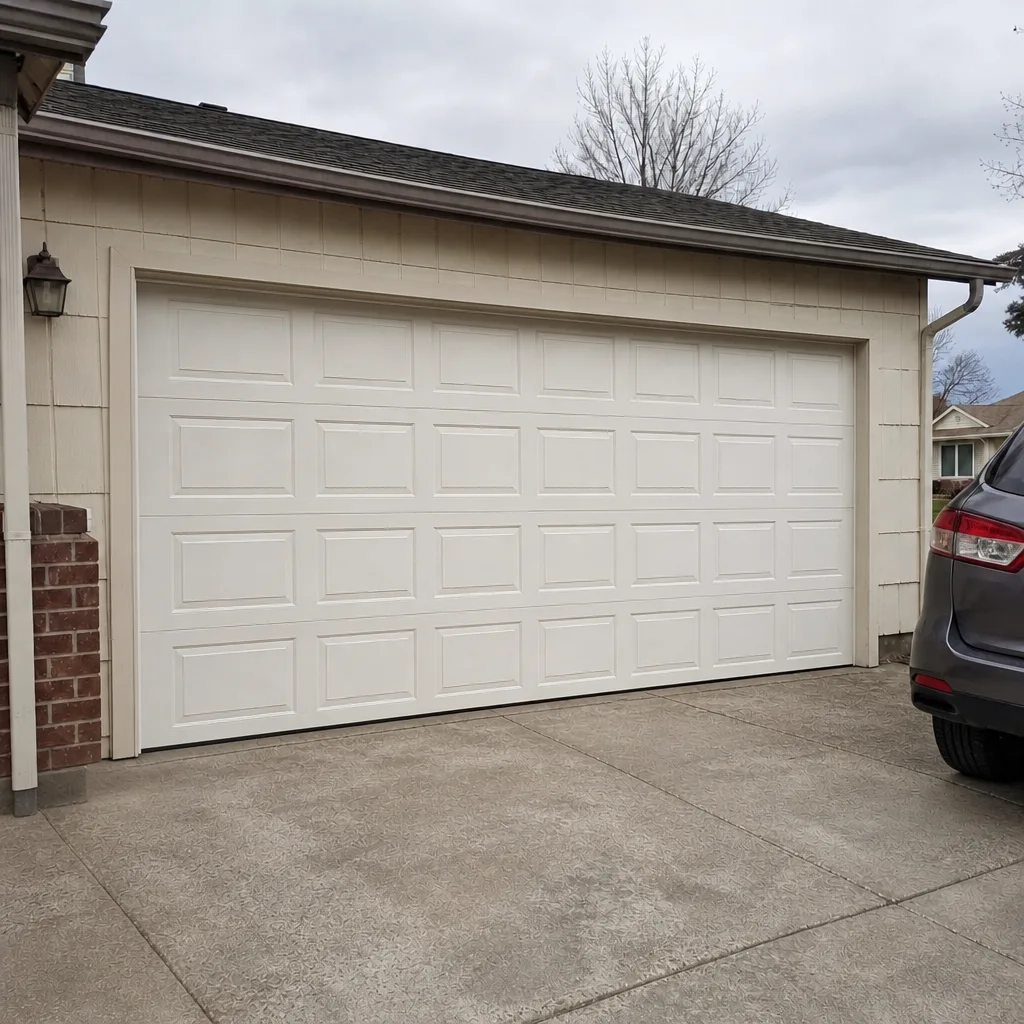
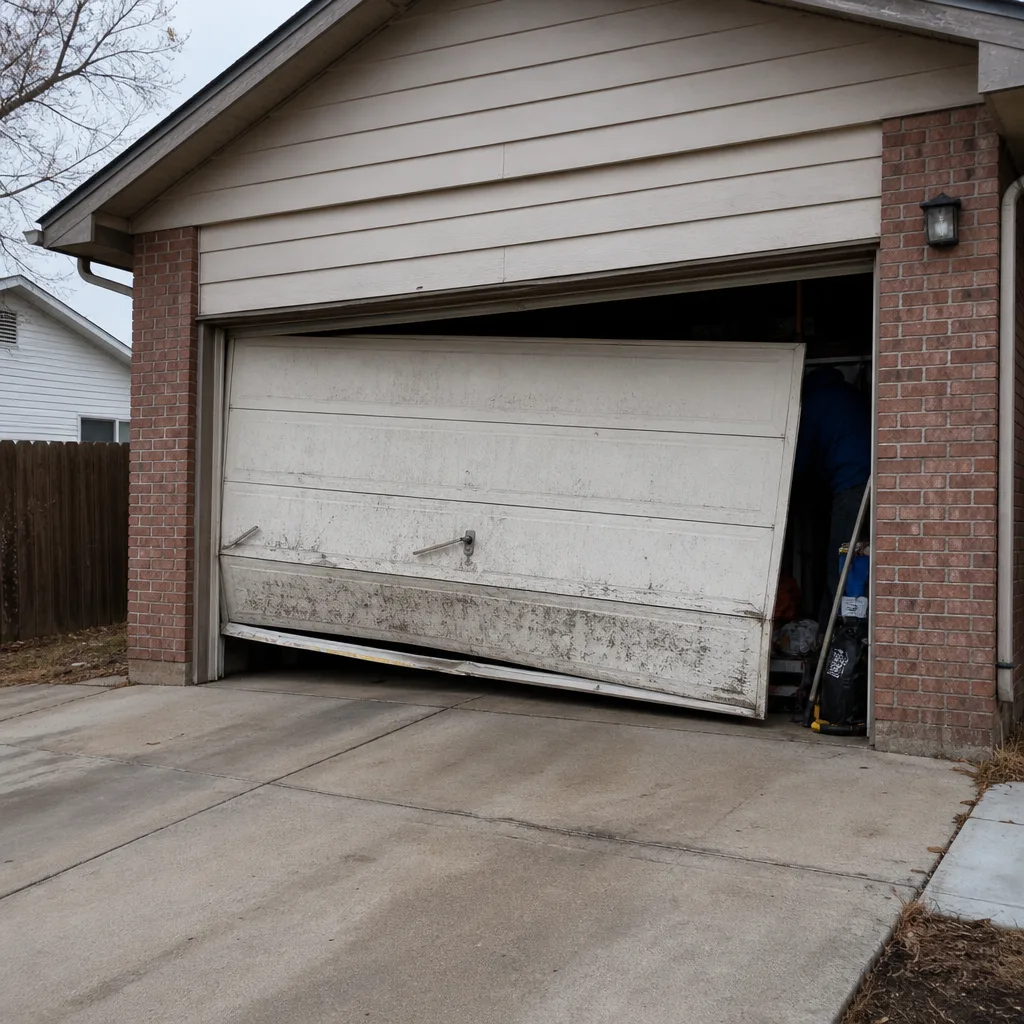
See the difference
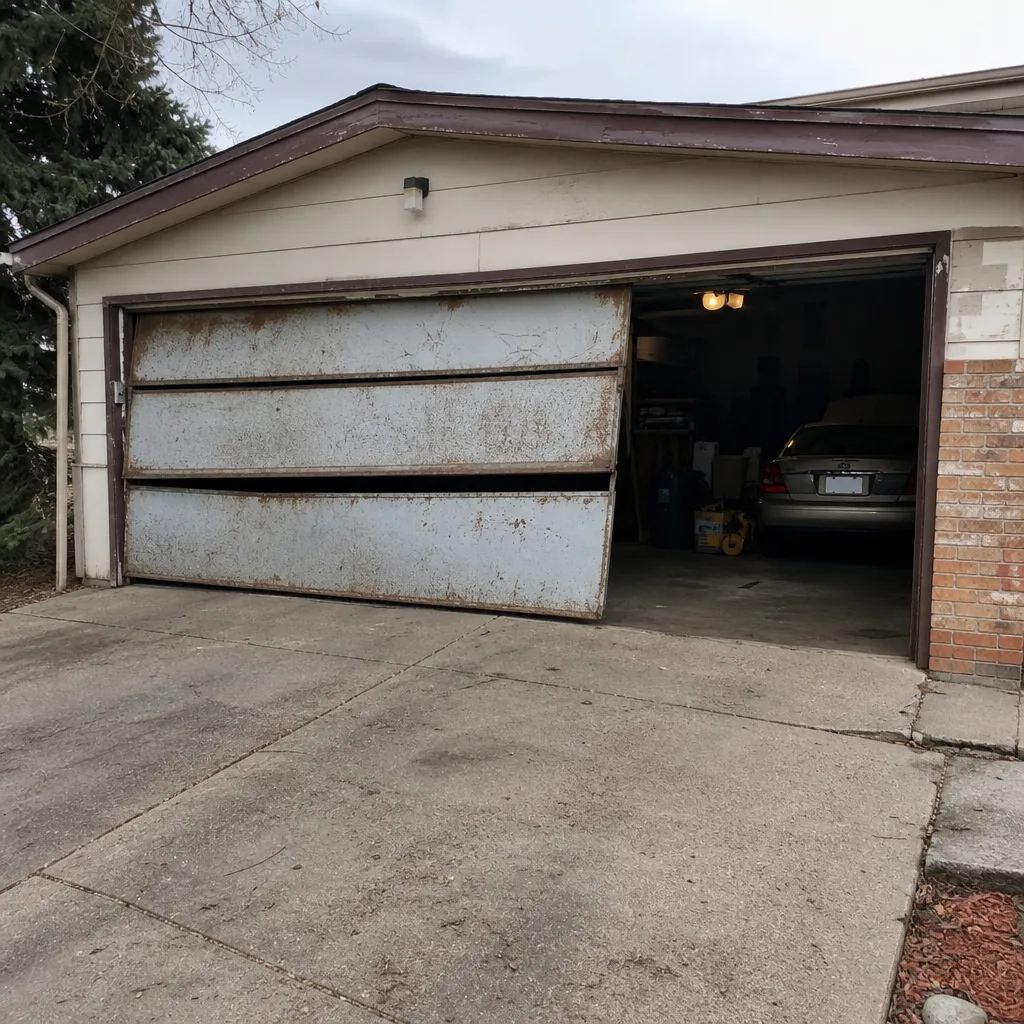 Before
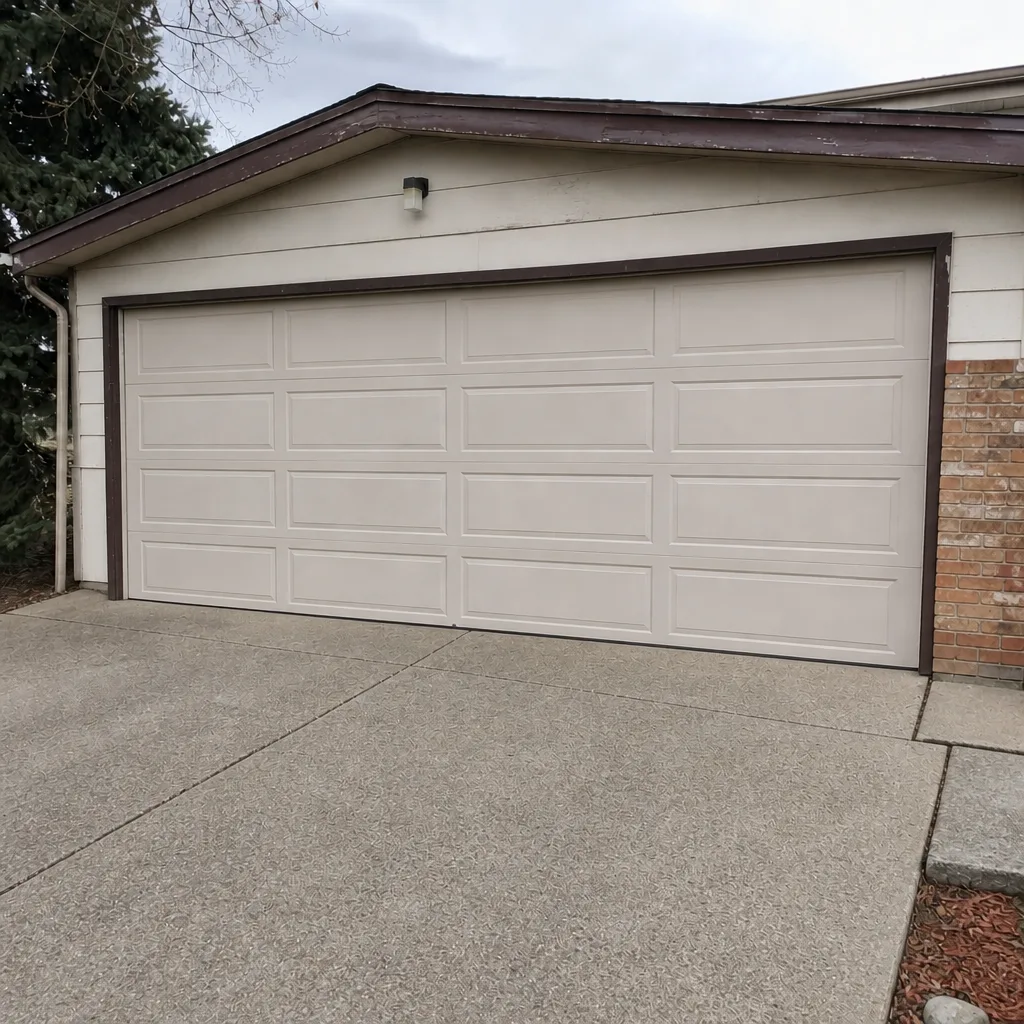 After
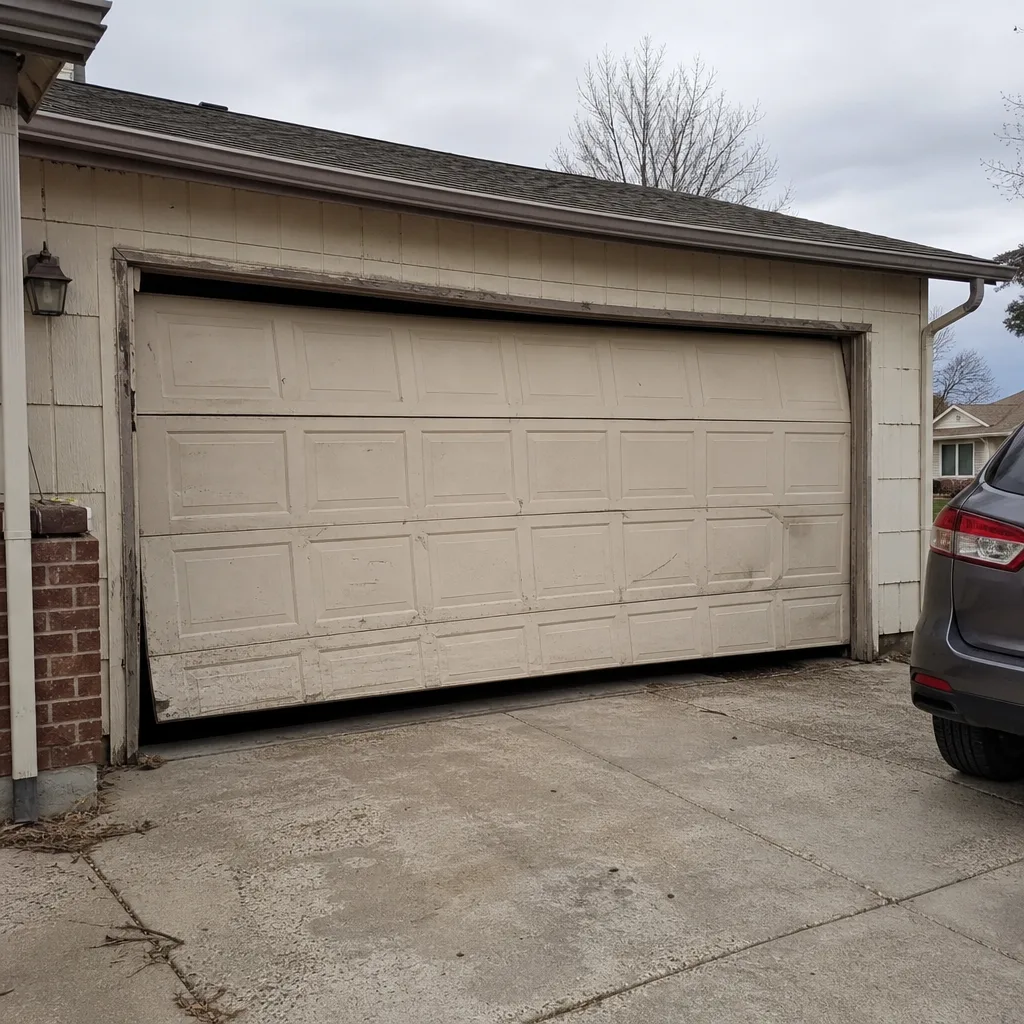 Before
 After
 Before
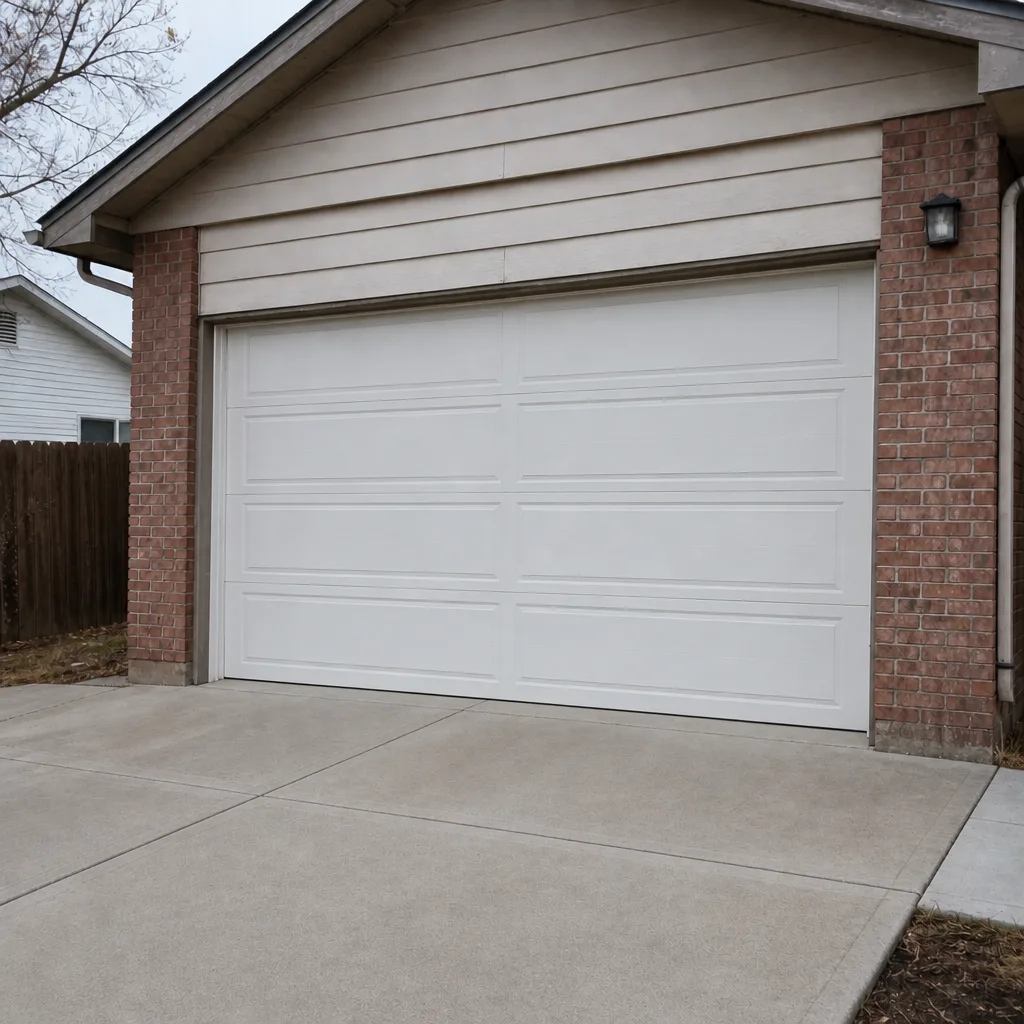 After
When to Call a Professional
Call a professional when a warning sign crosses into the stop tier: a snapped spring, a frayed cable, a door that reverses or drops, a door off track, or any door that moves on its own. Don’t cycle a stop-tier door while you wait. Call when a stage-two sign has been present for more than a few weeks, when the door gets noticeably heavier in cold weather, or when the opener is compensating with reversals or inconsistent limits. And call before winter if your balance test fails, because Centennial’s first cold snap will find the problem for you.
Garage Door Repair Centennial Pros offers free estimates in Centennial, call (844) 575-1130. Our technicians have up to 15 years of experience, and we handle both the door and the opener so you’re not coordinating two contractors. When the door won’t move, we do.
Frequently Asked Questions
The most common signs are a door that hesitates before moving, grinding or popping during travel, a door that reverses before closing, worn rollers, an uneven gap at the floor, and a door that gets heavier on cold mornings. The last one is especially common in Centennial because cold weather exposes spring fatigue that warm weather hides. Call (844) 575-1130 for an exact quote, estimates are free.
A spring that’s about to break usually shows a loss of balance first: the door gets heavy when you lift it by hand with the opener disengaged, or it won’t stay at halfway. A popping or cracking sound during travel is another warning. In Centennial, the first cold snap is often when a fatigued spring finally fails. Don’t try to adjust or replace a spring yourself. Call (844) 575-1130 for an exact quote, estimates are free.
Grinding alone usually isn’t an emergency, but it shouldn’t be ignored. Grinding typically means a seized roller or a worn hinge, and if it’s left alone, the resistance transfers to the opener and the springs. If grinding comes with a door that reverses, drops, or comes off track, stop using the door and call. Call (844) 575-1130 for an exact quote, estimates are free.
Cold metal is less elastic, so a spring that’s already lost some tension can’t lift the door the way it did in warm weather. That’s why spring failures cluster in the first cold mornings of the season. Getting the balance checked in the fall is the simplest way to avoid a January failure. Call (844) 575-1130 for an exact quote, estimates are free.
Most repair calls, including spring repair and opener repair, can be handled the same day. Emergency service is available for time-sensitive failures. New door installation is measured and scheduled rather than done same day. Call (844) 575-1130 for an exact quote, estimates are free.
No. The price is quoted and agreed before any work starts. We diagnose the door and the opener, give you a written estimate, and that estimate sets the final price. If the diagnosis changes the scope, we tell you before we start, not after. Call (844) 575-1130 for an exact quote, estimates are free.
The Bottom Line
Garage door failures follow a progression, and the warning signs arrive in order. A door that hesitates, grinds, or gets heavy on a cold Centennial morning is in stage two: it’s compensating for a mechanical deficit, and that compensation has a limited number of cycles. The signs in the stop tier, a snapped spring, a frayed cable, a door that reverses or drops, mean stop using the door. The signs in the monitor tier mean schedule a repair before winter finds the problem for you. Ten minutes a month with the checklist above catches most of this early. Our technicians have up to 15 years of experience, we handle springs in-house, and we work on the brand already in your garage.
If your door is showing any of the signs in this guide, call Garage Door Repair Centennial Pros at (844) 575-1130 for a free estimate. Visit Garage Door Repair Centennial Pros to see what we handle. Your door. Same day.
Written by the team at Garage Door Repair Centennial Pros.